
Quick Summary
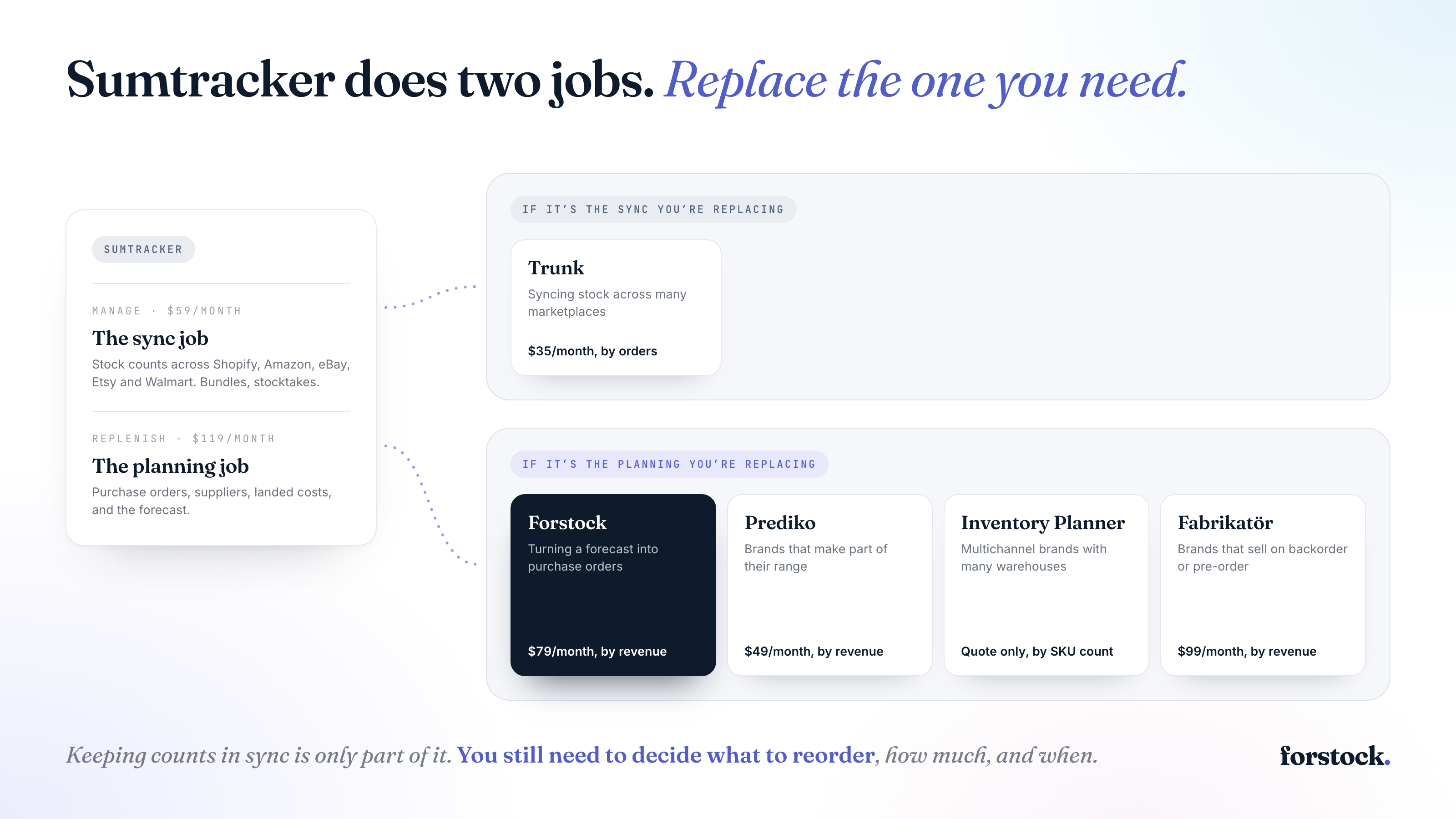
Sumtracker does two jobs, which include syncing your stock and helping you plan what to buy. If it's the planning you're replacing, look at Forstock or Prediko as a Sumtracker alternative. If it's the sync, look at Trunk.
| Tool | Best For | Starting Price |
|---|---|---|
| Forstock | Turning a forecast into purchase orders | $79/month (by revenue) |
| Prediko | Brands that make part of their range | $49/month (by revenue) |
| Trunk | Syncing stock across many marketplaces | $35/month (by orders) |
Why Shopify Brands Start Looking Past Sumtracker
Sumtracker helps Shopify brands keep inventory counts in sync across Amazon, eBay, Etsy, Walmart, and other sales channels. And with a 4.8-star rating from 127 reviews on the Shopify App Store, it's clearly doing something right.
But keeping stock counts accurate across channels is only part of managing inventory. You still need to figure out what to reorder, how much to buy, and when to place your next purchase order. That's where merchants often start looking for alternatives.
One member of the Shopify Community made a similar point. They grouped tools like Prediko and Inventory Planner under inventory planning, while describing Sumtracker as more focused on "sync + some execution." As they explained, that's why "a lot of merchants end up stitching 2–3 tools together."
In this guide, we'll look at five Sumtracker alternatives, from inventory planning platforms to simpler stock-syncing tools. We'll also compare their features and pricing, including what each would cost a brand doing $3 million in annual revenue.
Why Listen to Us?
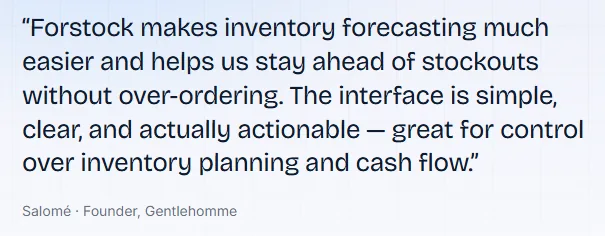
Gentlehomme, a menswear brand in North Miami, plans its reorders with Forstock. It now has about 50% fewer stockouts on core styles and about 20% less cash tied up in overstock. Authentic Stadium, a sneaker shop in Dakar, has about 50% fewer stockouts on its key models. Plus, it saves around five hours a week on replenishment.
Both results come from deciding what to reorder and when. That’s the job this guide covers. So, we'll be straight about where each tool fits and where Forstock doesn't.
What Is Sumtracker?
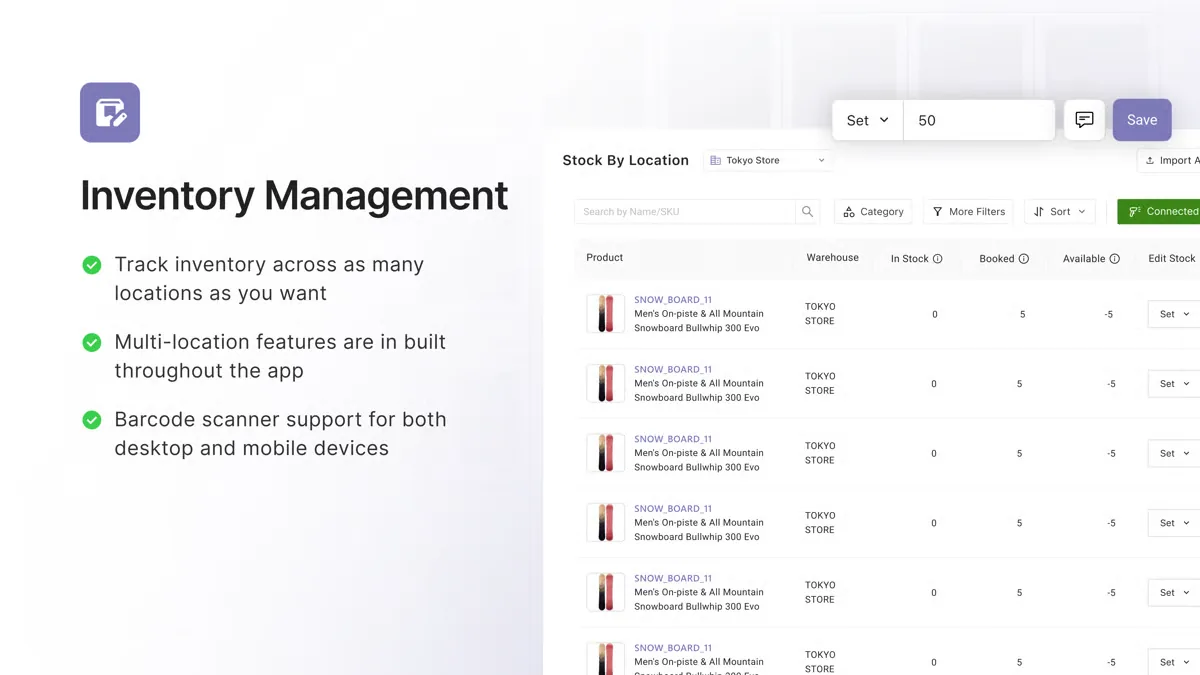
Sumtracker is inventory management and replenishment software for Shopify and Amazon brands. It's mainly a sync tool. Each product variant has its own SKU (stock keeping unit). So when one sells on a channel, Sumtracker updates that SKU's availability on your other stores within minutes.
It connects to Shopify (several stores and POS included), Amazon, eBay, Etsy, and Walmart. With Amazon FBA (Fulfillment by Amazon), it only reads stock. It also tracks, works out, and deducts each stock from its components when a bundle sells.
Sumtracker comes in two plans: Manage and Replenish. Its Shopify listing calls it "A Powerful Stocky alternative."
Why Seek Alternatives to Sumtracker?
When choosing an inventory and forecasting tool, you need to consider a few things. These include pricing, forecasting depth, and how much control the sync takes. If any of these matter to you, here’s why you should consider Sumtracker alternatives.
Forecasting and Purchase Orders Are on the Pricier Plan
Sumtracker's Manage plan starts at $59/month and covers sync, bundles, and stocktakes. For purchase orders, suppliers, landed costs, or the forecast, you'll need the Replenish plan. Replenish starts at $119/month. Both prices cover up to 2,500 orders a year (that’s about seven orders a day).
After that, the price climbs with your order count. If you're doing $3 million a year at a $40 average order, that's 75,000 orders. On Replenish, you'd pay at least $499/month.
The Planning Side Is New, and It Assumes Orders Arrive on Time
Sumtracker only launched Replenish in 2026. The forecast covers the basics; it reads 12 months of sales, leaves out days a product was out of stock, and allows for seasonality.
However, you'll run into two gaps quickly. First, you can only import Shopify sales history, so an Amazon or eBay channel's history starts the day you connect it. Second, the dashboard assumes confirmed purchase orders arrive on time. Sumtracker's own guide warns this "can make products look covered when they aren't."
Sync Can Overwrite Stock Changes Made Outside the App
When Sumtracker is set as the master for a location, its numbers win. If another app changes the inventory in Shopify, Sumtracker overrides that change on its next sync.
In a March 2026 review, A Twist of Yarn, a Canadian yarn shop, said the app reversed stock it had added. It also reversed refunds, too, "sometimes hours, sometimes days after!" Sumtracker replied that the behavior "is by design" and is flagged during setup. If you mainly wanted a planning tool, that's more control over your Shopify counts than you signed up for.
5 Best Sumtracker Alternatives
We compared each one on forecasting, purchase orders, price, and sync.
| Tool | Best For | Starting Price |
|---|---|---|
| Forstock | Turning a forecast into purchase orders | $79/month (by revenue) |
| Prediko | Brands that make part of their range | $49/month (by revenue) |
| Inventory Planner | Multichannel brands with many warehouses | Quote only (by SKU count) |
| Fabrikatör | Brands that sell on backorder or pre-order | $99/month (by revenue) |
| Trunk | Syncing stock across many marketplaces | $35/month (by orders) |
1. Forstock
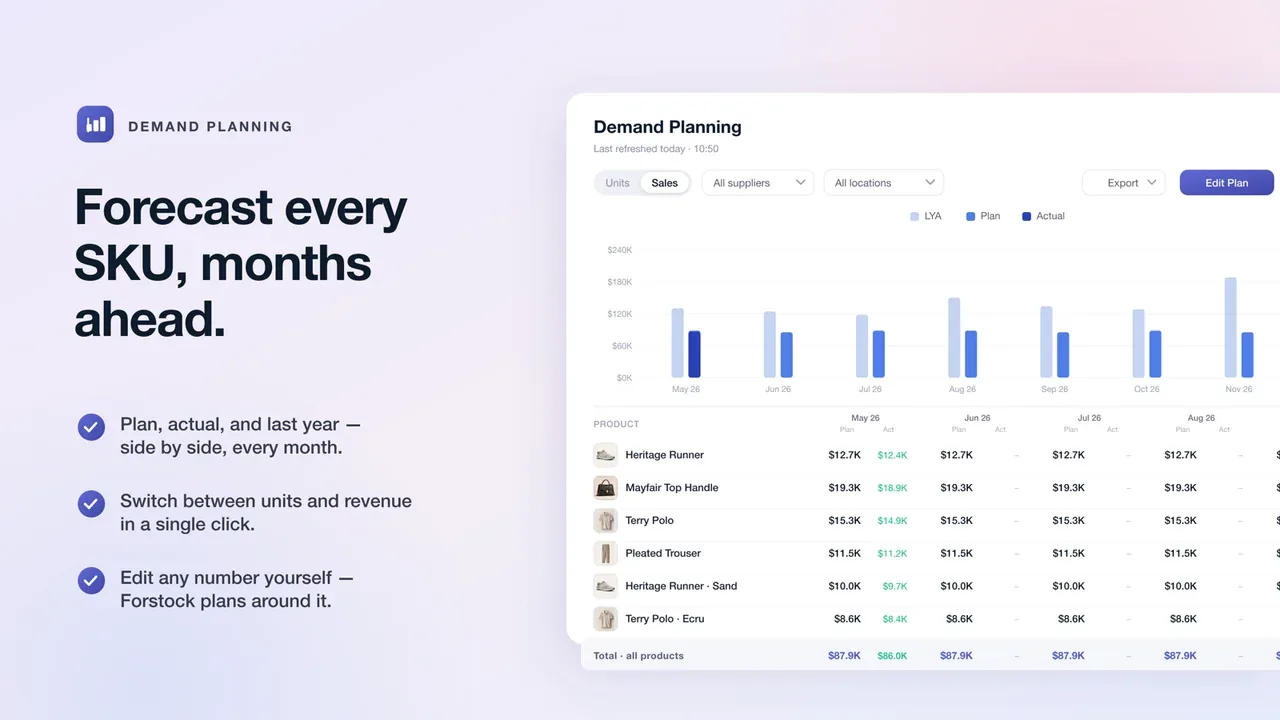
Forstock is an AI inventory planning platform for Shopify brands. The tool forecasts demand, identifies stock risks, and recommends what and when to reorder. Forstock then turns those recommendations into purchase orders across your suppliers, stores, warehouses, and sales channels.
If you came to Sumtracker for the planning feature, Forstock’s the closest fit on this list. It reads the sales from Shopify and Amazon. Stock comes from your own warehouse, the outside warehouses that ship orders for you, or any of the 150+ warehouse systems and 3PLs. It doesn’t sync stock between channels, though, so you need to keep a sync tool like Trunk for eBay or Etsy.
Forstock’s forecast covers every variant, location, and sales channel for up to 12 months out. Like Sumtracker and Inventory Planner, it knows which days an SKU was out of stock. It also rebuilds every promotion you've run from your discount history, so last year's sale doesn't inflate next month's plan. When a promo or launch is coming up, you add the dates, discount, channel, and products, and the plan adjusts.
From there, the reorder list looks ahead for each SKU, day by day, at every location. It finds the day you'd run out, subtracts your lead time, and gives you a should-order-by date. The suggested quantity also fits your supplier's MOQ (minimum order quantity) and pack size, rounding up when it has to.
You can also open any number and see what went into it. Ezz Studios, a fashion brand in Paris, had tried a few tools and always went back to spreadsheets to verify the numbers themselves. Its founder, Leana, calls Forstock "the first that actually feels close to how we think about reordering." The brand now has about 40% fewer stockouts.
As for price, a $3 million brand would pay $159/month on our $1M–5M tier.
Key Features
- Alfred AI: Ask what's running low or which purchase orders (POs) are late, and see the sources behind each answer
- Overrides: Type your own number for any month, product or location
- Bundle Planning: Pull bundle demand down to the component SKUs you buy
- Purchase Orders: Email POs to suppliers and track each one from draft to received
- Partial Receiving: Receive deliveries line by line, or split a PO across two shipments
- Landed Cost: Add freight, duty, and insurance to a PO in the supplier's currency
- Stock Statuses: Sort every SKU into Out of stock, Running low, Healthy, or Overstock
Pricing
Forstock pricing is one plan, priced by your last 12 months of Shopify revenue:
- $0–1M: $79/month
- $1M–5M: $159/month ($135/month billed annually)
- $5M–10M: $279/month
- $10M–20M: $479/month
- $20M–40M: $899/month
- $40M+: custom
Every tier includes every feature and unlimited SKUs, suppliers, and locations. There's a 14-day free trial with no credit card.
Pros
- Forecasting and purchase orders come on every tier, so there's no bigger plan to buy
- Declared promos and launches feed the forecast, so a planned sale won't throw off your reorders
- Your Shopify stock only changes when you switch on sync for a received PO
Cons
- No stock sync between channels, so eBay or Etsy sellers still need a sync app
- Until you have six months of orders, the forecast uses a simple average
- No raw-material, bill of materials, or expiry-date planning for manufacturers
2. Prediko
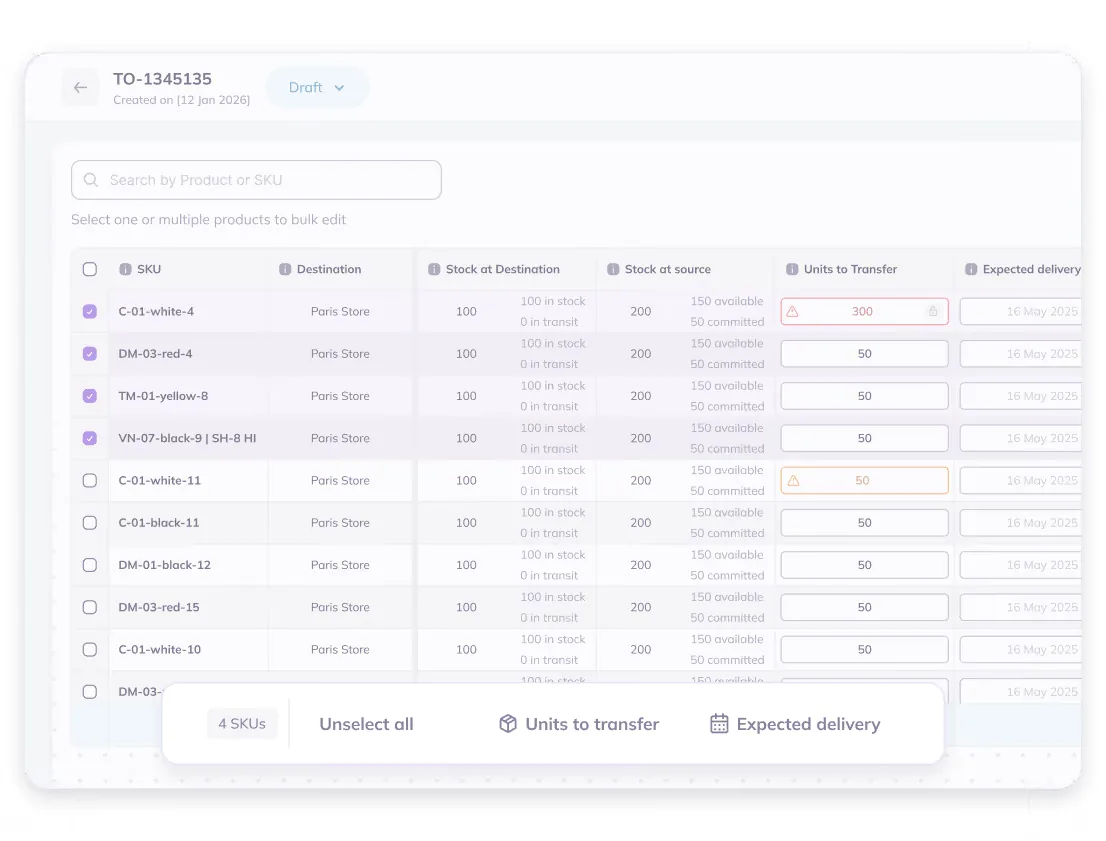
Prediko is an AI inventory planner for Shopify brands. The planner covers much of the same ground as Forstock. It forecasts every SKU in every warehouse from your last 12 months of sales, with store-wide seasonality. It models new products on similar ones in their category, and you add promotions by editing the forecast by hand.
If you make part of your range, Prediko goes further than Forstock does. Its Raw Materials and BOM add-on plans production orders from a bill of materials. It also plans from your Shopify stock counts and only reads Amazon FBA data. So, it won’t sync stock back to Amazon.
Key Features
- Buying Table: Turn stock cover, lead time, and the forecast into one-click PO suggestions
- Supply Planning: See a purchase order calendar up to 12 months ahead
- Transfers: Get suggested stock transfers between locations and track each one
- Safety Stock: Set a safety stock in days for the whole account or for a single SKU
Pricing
Prediko prices by your last 12 months of revenue:
- Under $100K: $49/month
- $100K–500K: $119/month
- $500K–2M: $199/month
- $2M–5M: $349/month
- Up to $3,499/month for larger brands, and custom above $50M
Annual plans give you two months free, and there's a 14-day free trial. Raw materials planning is an add-on from $20/month.
Pros
- Restock suggestions work per warehouse, which helps if you split stock with a 3PL
- The BOM add-on covers brands that assemble or make part of their range
- At $49/month for businesses under $100K, it's the cheapest planning tool here to start with
Cons
- Demand plans show a monthly view only, with no weekly breakdown
- Amazon inventory can run 1–2 hours behind
- Dedicated onboarding only comes on plans above $499/month
3. Inventory Planner
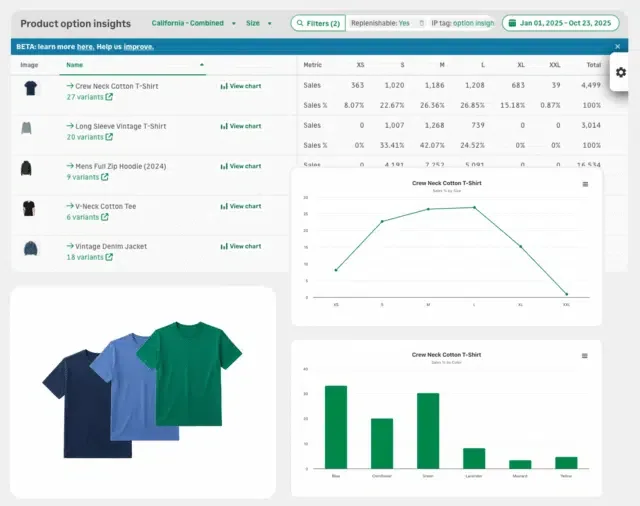
Inventory Planner by Sage has been forecasting demand for ecommerce brands since 2012. It connects more sales channels than any other planner in this list, including eBay, Walmart, WooCommerce, and BigCommerce.
You'll pick a forecast method for each variant (recent sales and trends, last sales, or seasonal). Like Sumtracker and Forstock, it can adjust for past stockouts, though you'll have to switch that setting on. Getting started takes more work than with Prediko or Fabrikatör, since pricing is quoted per account and implementation is required. It also calls itself "a mostly read only service," so it won't replace Sumtracker's sync.
Key Features
- Open-to-Buy: Plan buying budgets by month or by retail week
- Container Planning: Size a PO by cubic meters or weight to fill a shipping container
- Warehouse Transfers: Create transfer orders from the replenishment report
- New Product Forecasts: Borrow sales from similar items, matched on size, color, or fabric
Pricing
Inventory Planner has no public pricing. It quotes each account by the number of replenishable SKUs, with unlimited users included. Implementation is required.
Pros
- Combines sales from every connected channel into one demand forecast
- Lead times can be set per location, and buying suggestions cover warehouses, stores, FBA and 3PLs
- Unlimited users at no extra cost
Cons
- No public pricing or advertised free trial
- Orders and stock sync once a day, and forecast settings can only be set in months
- As of October 8, 2026, its Shopify App Store listing reads "not currently available"
4. Fabrikatör
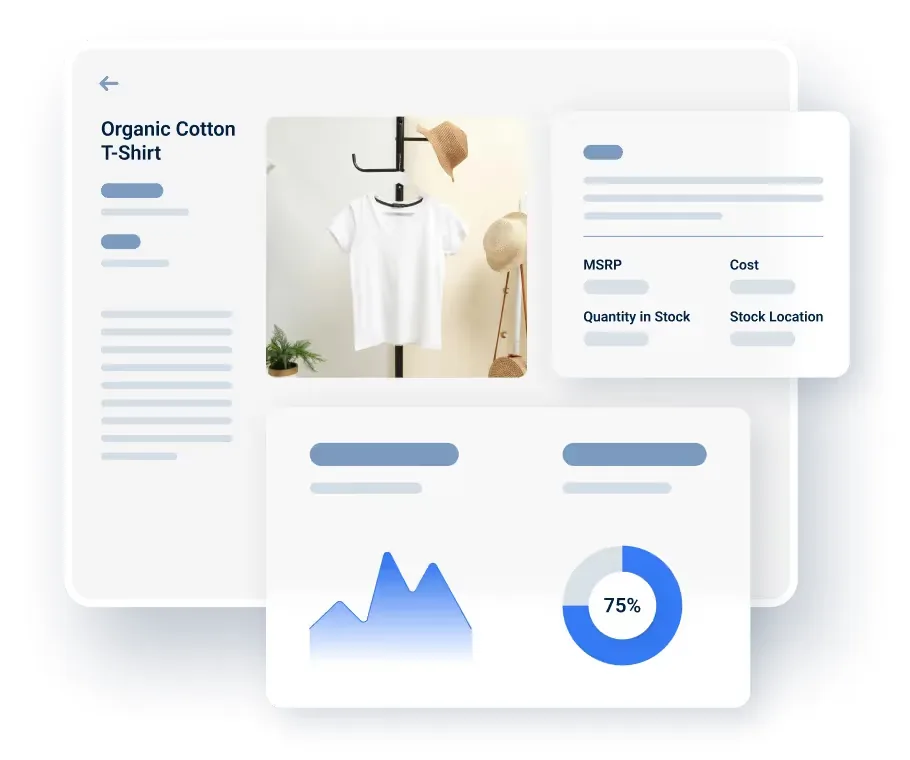
Built by a team in Berlin, Fabrikatör is inventory planning software for growing Shopify brands. Its own comparison page calls Sumtracker "sync-first" and itself "planning-first."
Fabrikatör's day-to-day reorder math is easy to check. It multiplies your daily sales average by the days of stock you want, then subtracts current and incoming stock. For seasonality, there's a separate long-term plan (3 to 12 months out). It's also built for backorders, which it caps to the stock arriving on your purchase orders.
Key Features
- MOQ Levels: Set minimum order quantities by variant, product option, or product group
- Split Purchase Orders: Divide a PO between warehouses or by delivery date
- Landed Cost: Add duty, freight, insurance, or custom costs to each PO
- Fabrikatör MCP: Ask an AI assistant about your stock, forecasts, and purchase orders
Pricing
Fabrikatör prices by your trailing 12 months of revenue per store:
- $0–500K: $99/month ($79/month billed yearly)
- $500K–1.5M: $149/month
- $1.5M–2.5M: $199/month
- $2.5M–5M: $350/month
- Up to $1,999/month for larger brands, and custom above $50M
Backorders cost $0.75 each. There's a 14-day free trial and a 30-day money-back guarantee.
Pros
- The reorder formula is published, so you can check any suggestion yourself
- Backorder ship dates come from incoming POs, and Klaviyo can send the emails
- Three MOQ levels suit suppliers with minimums across a product range
Cons
- Sales from other channels count only if they flow into Shopify
- There's no separate safety stock setting, so your buffer comes from days of stock
- Backorders cost $0.75 each and aren't available during the trial
5. Trunk
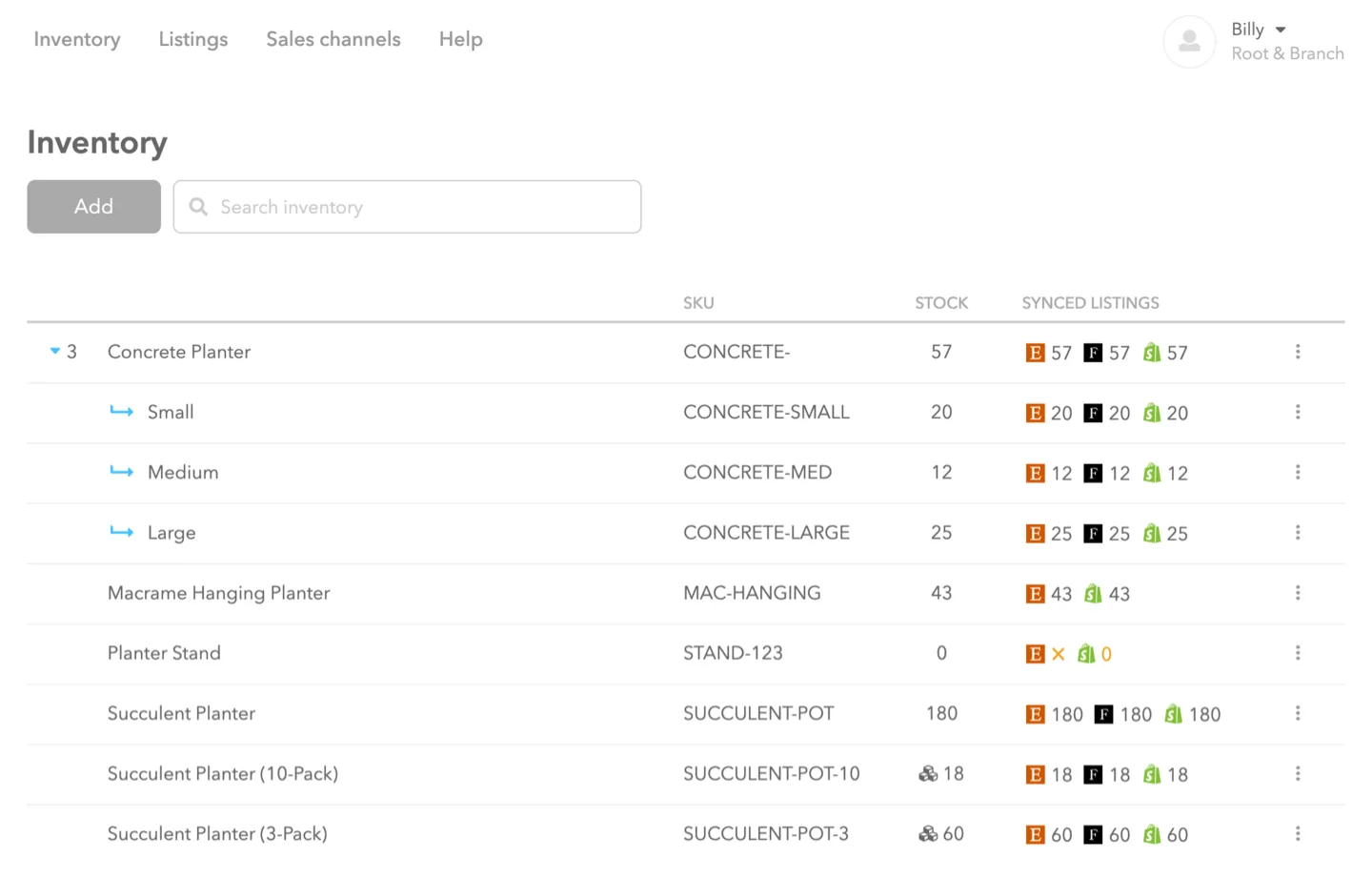
Trunk is the one tool here that does Sumtracker's other job. It syncs stock in real time across 20 platforms, including unlimited Shopify stores, Amazon, eBay, Etsy, Walmart, and Faire.
Unlike Sumtracker, Trunk doesn't make you pick a master channel because it goes by the time of each change. It'll also pick up stock changes made in other Shopify apps. But Trunk doesn't plan. There's no forecast and no purchase orders. If planning is why you're leaving Sumtracker, pair Trunk with Forstock, Prediko, or Fabrikatör.
Key Features
- SKU Matching: Link listings across channels whenever they share a SKU
- Bundles and Kits: Adjust component stock when a bundle sells
- Low Stock Alerts: Get an email when a product drops below your threshold
- Duplicate SKU Syncing: Keep duplicate listings of one SKU in step (available on the Pro plan)
Pricing
Trunk prices by fulfilled orders per month, averaged over three months:
- Essential is between $35/month (up to 100 orders) and $279/month (6,001–10,000 orders)
- Pro, which adds bundles and kits starts from $39/month to $329/month
- Over 10,000 orders a month means you have to contact sales
Every plan includes unlimited channels and a 14-day free trial with no credit card.
Pros
- Only fulfilled orders count toward your price
- Stock changes made by hand or in another app get synced out
- Connects channels Sumtracker doesn't list, like Faire, Square, WooCommerce, and TikTok
Cons
- No forecasting, reorder suggestions, or purchase orders
- No ShipStation or ShipHero integration yet
- Bundles must always use the same components
Selection Criteria
How We Evaluated
We checked every fact on each vendor's own site on October 8, 2026, then judged the tools on four questions:
- Forecast: Does it allow for stockouts, seasonality, promotions, and new products?
- Purchase Orders: Does it give reorder dates and send and receive POs?
- Price: What's it priced by, and what does a $3 million brand pay?
- Sync: Does it push stock between channels?
For that $3 million brand at a $40 average order (75,000 orders a year), here's what you'd pay on monthly billing:
- Sumtracker Replenish: $499
- Forstock: $159
- Prediko: $349
- Fabrikatör: $350
- Trunk: $279 on Essential (sync only)
- Inventory Planner: quoted per account
How to Choose
- If you sell mainly on Shopify and Amazon and need to know what to buy, start with Forstock since every tier has the forecast and POs
- If you make part of your range, Prediko's BOM add-on plans your production orders
- If you plan across eBay, Walmart, WooCommerce, and BigCommerce, Inventory Planner covers them all
- If backorders drive a lot of your sales, Fabrikatör ties them to your incoming POs
- If overselling is your main problem, Trunk replaces Sumtracker's sync
Start With the Half of Sumtracker You Want to Replace
If Sumtracker's sync works for you and planning is what's missing, keep it for your marketplaces and add a planner on top. If you only sell on Shopify, a planner may be all you need.
If planning is what you’re replacing, Forstock gives you the forecast, should-order-by dates, and purchase orders on every tier. A $3 million brand pays $159/month, against $499 on Sumtracker’s Replenish plan.
Start a 14-day free trial with no credit card, and you'll have your first plan the same day. Or book a 20-minute demo to see it with your own data.
FAQs
Can Shopify Do Inventory Management?
Yes. Since Stocky shut down on August 31, 2026, the Shopify admin covers suppliers, transfers, and purchase orders, including receiving stock. Sidekick, Shopify's assistant, can help forecast demand and draft POs. But you can't email a PO to a supplier from the admin, and some plans need an app for ABC analysis.
What Is the Best Free Inventory Tracking Software?
If you only sell on Shopify, the free option is Shopify's own inventory management that’s built into your plan. It tracks stock across your online store and Shopify POS. Dedicated apps are paid, but every tool in this guide except Inventory Planner offers a 14-day free trial.
What Is the Best App to Track Inventory and Sales?
A sync app like Sumtracker or Trunk is best for tracking stock, because it updates every channel when an order comes in. For turning those sales into reorder dates and quantities, you'll want a planning app like Forstock. If you sell on several marketplaces, you may need one of each.
How Do You Uninstall a Shopify App That Holds Inventory?
Start by exporting your purchase order history and a full stock count. Then turn off the app's sync, so it stops pushing numbers to Shopify. Next, uninstall it from the Apps section of your Shopify admin. Afterward, spot-check a few best sellers to confirm Shopify's counts match your shelves.