
Quick Summary
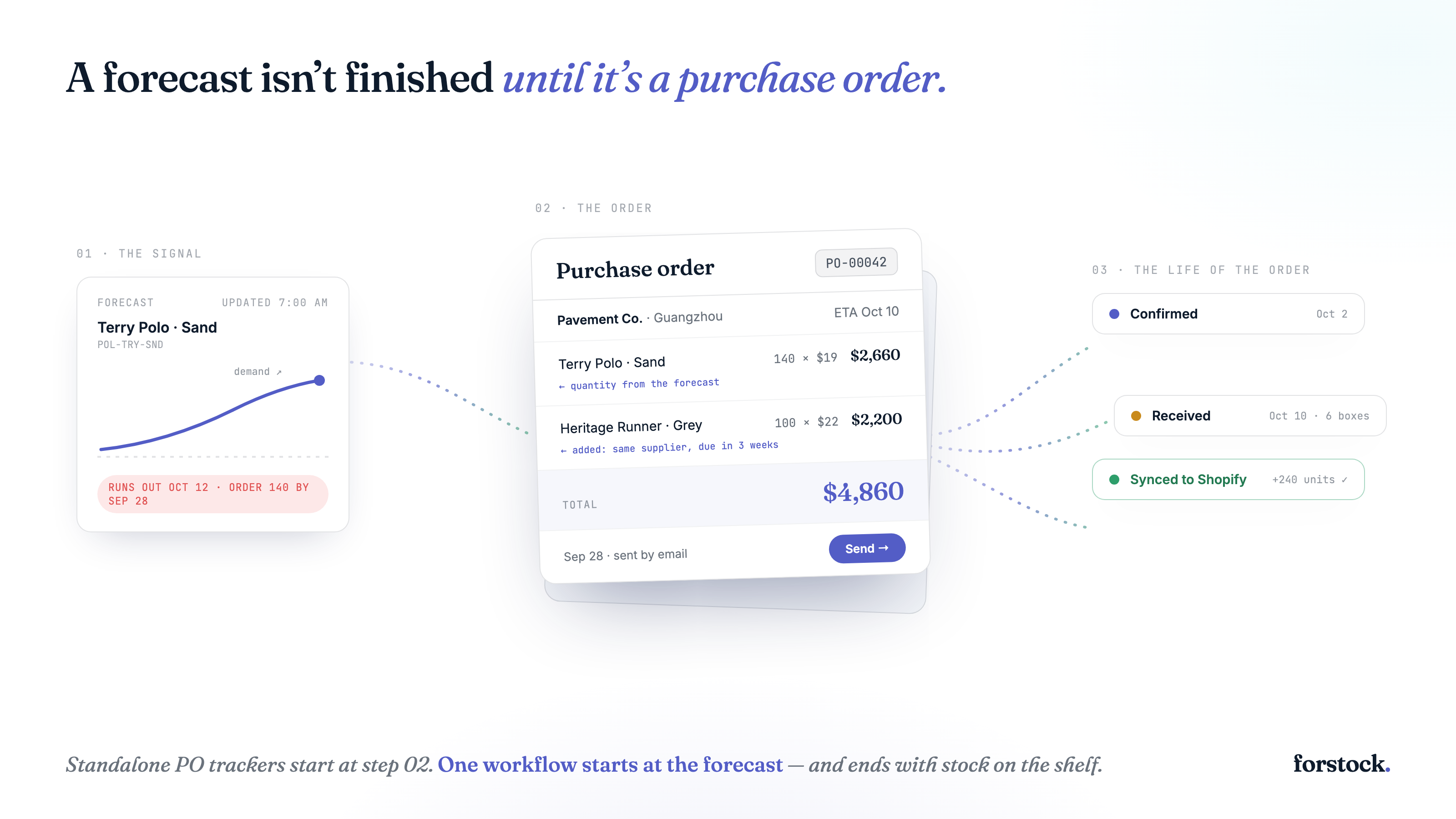
The best purchase order software for a Shopify brand tells you what to reorder, from which supplier, and by when. Then it tracks each PO until you've received the stock in Shopify. Forstock, Prediko, and Fabrikatör do both jobs best, so they're our top three.
| Tool | Best For | Starting Price |
|---|---|---|
| Forstock | Forecast, reorder date, and PO in one plan | $79/month |
| Prediko | Multi-store brands planning a year of POs | $49/month |
| Fabrikatör | Small teams with 50+ SKUs leaving spreadsheets | $99/month |
Where Stockouts and Overstock Start
Out-of-stocks and overstocks cost retailers $1.7 trillion a year, according to IHL Group's 2026 study, and empty shelves make up 65.6% of that. For a Shopify brand, both often start with a purchase order that went out late or was seized from a spreadsheet that's out of date.
Stocky, the app that came with Shopify POS Pro, handled purchase orders until it shut down on August 31, 2026. If you used it, you'll need a new home for your suppliers and POs. So, which tools work out what to order and when, and which only track a PO once you've placed it?
Why Listen to Us?
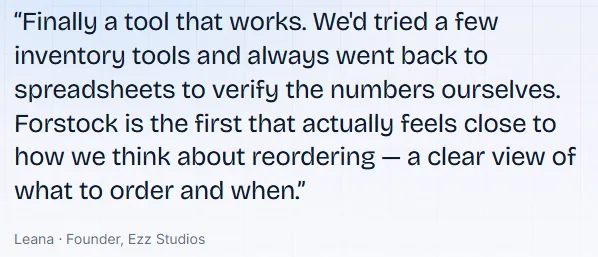
Since switching to Forstock, Ezz Studios in Paris has about 40% fewer stockouts and saves about 5 hours a week it used to spend in spreadsheets. Gentlehomme, a menswear brand in North Miami, has ~50% fewer stockouts on its core styles and ~20% less cash tied up in overstock. Our founder, Rami, was VP of Sales at a digital freight forwarder, then built Forstock to take each reorder from forecast to supplier PO. That's the same job we judged every tool here on.
8 Best Purchase Order Management Software for Shopify
The comparisons below assess each tool on reorder automation, supplier lead-time tracking, and Shopify-native sync.
| Tool | Best For | Starting Price | Reorder Suggestions |
|---|---|---|---|
| Forstock | Forecast, reorder date, and PO in one plan | $79/month | AI forecast per SKU and location |
| Prediko | Multi-store brands planning a year of POs | $49/month | AI demand plan and buying table |
| Fabrikatör | Small teams with 50+ SKUs leaving spreadsheets | $99/month | Forecast-based restocks |
| Inventory Planner by Sage | Multichannel and wholesale brands at scale | No public pricing | Forecast per location |
| Sumtracker | Shopify and Amazon sellers who need stock sync | $119/month for POs | Forecast from 12 months of sales |
| Cin7 Core | Inventory, orders, and accounting in one system | $349/month | Reorder points and sales velocity |
| Finale Inventory | In-house fulfillment with three-way matching | $499/month | Min/max and sales velocity |
| Auto Purchase Orders | Dropship and wholesale POs from Shopify orders | $39.99/month | Manual, you set quantities |
1. Forstock
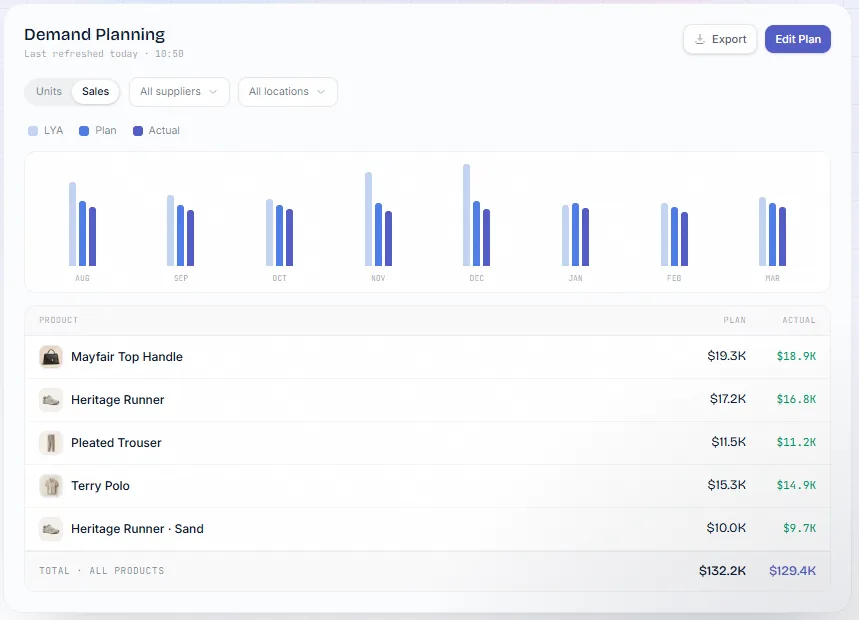
Forstock is an AI inventory planning platform for Shopify brands that forecasts demand, identifies stock risks, and recommends what and when to reorder. It turns those recommendations into purchase orders across suppliers, stores, warehouses, and sales channels.
Forstock walks each SKU forward day by day at each location, using stock on hand, the forecast, and the POs already on their way. Supplier lead times connect the forecast to reorder timing. For example, a product with four weeks of stock remaining needs attention if its supplier takes six weeks to deliver. Forstock works back from the day the product runs out to a should-order-by date, then rounds the order up to the supplier's MOQ and pack size.
When you're ready to buy, you select the rows and Forstock drafts one purchase order per supplier. Separate forecasting and PO tools require you to transfer those figures or maintain integrations between them. Forecast quality still depends on the data and assumptions behind it. That's why you can open any number to see what went into it, and type over it when a promo or launch is coming.
Key Features
- Demand Planning: Forecast each SKU by location and channel up to 12 months out, corrected for stockouts and promos
- Supplier Rules: Set each supplier's lead time, MOQ, and pack size, and bulk-edit hundreds of products at once
- Purchase Orders and Suppliers: Email POs and track each one from draft to received
- Partial Receiving: Receive line by line and split a PO across deliveries or locations
- Landed Cost: Add freight, duty, and insurance to see landed cost per unit
- Alfred AI: Ask which POs are late and confirm any change Alfred stages
Pricing
Forstock prices by annual revenue, with every feature on every plan:
- $0–1M: $79/month
- $1M–5M: $159/month
- $5M–10M: $279/month
- $10M–20M: $479/month
- $20M–40M: $899/month
- $40M+: custom pricing
Annual billing saves 15%, and there's a 14-day free trial with no credit card.
Pros
- Open POs count as incoming stock, so you won't order the same units twice
- Unlimited SKUs, suppliers, and locations, so a new warehouse doesn't raise the price
- Received stock only updates Shopify when you turn sync on for that PO
Cons
- With under six months of orders, you'll plan from a simple average
- There's no manufacturing or bill-of-materials planning
2. Prediko
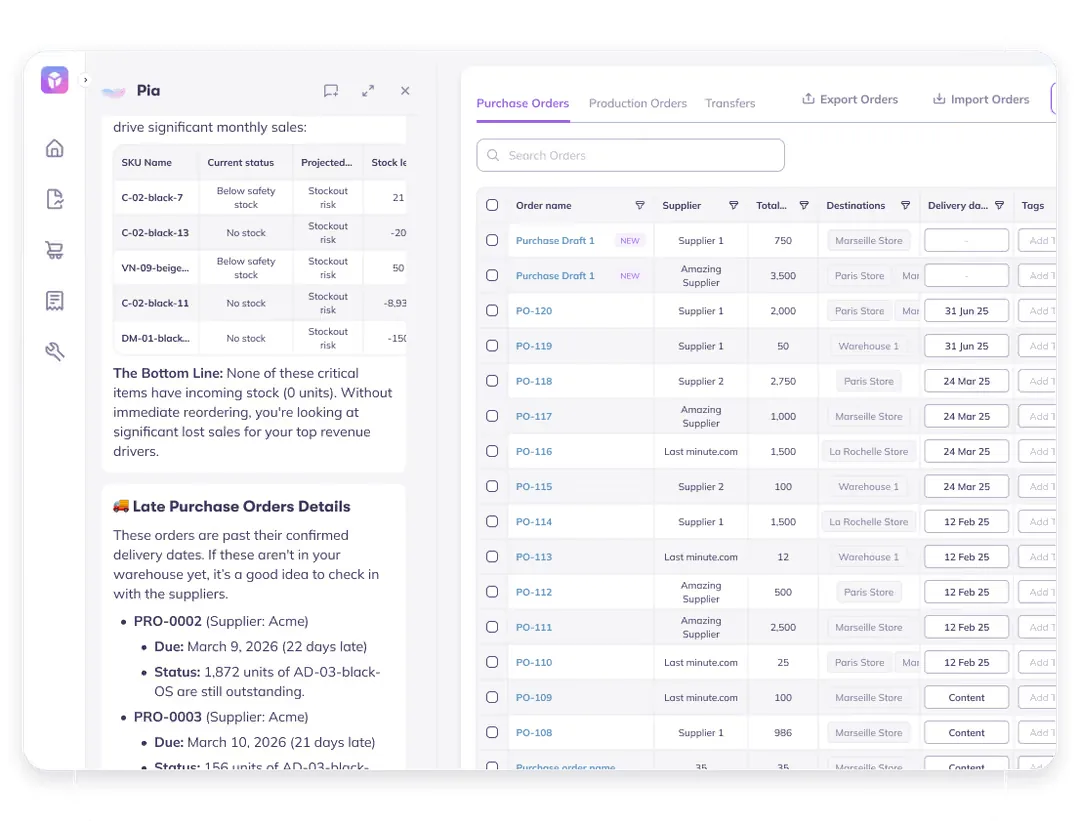
Prediko suits Shopify brands that want AI-assisted purchasing rather than manual PO scheduling. Its supply-planning module generates a 12-month PO calendar, while its replenishment buying table recommends what to order, when to order it, and how much to buy.
Key Features
- One-click POs: Create POs straight from the buying table
- PO Sharing: Send POs as a PDF, an Excel file, or an email
- Approvals: Route POs through approval statuses before they go out
- Landed Costs: Roll extra PO costs into each line's landed cost
Pricing
From $49/month under $100K in revenue to $349/month at $2M–$5M, with a 14-day free trial.
Rating
Shopify App Store: 4.9/5 (255 reviews)
Pros
- Unlimited users, stores, and SKUs on every plan
- POs can be split by location and pushed into your WMS
- Received units and costs sync back to Shopify
Cons
- The Amazon FBA connection is one-way, so it won't send POs to Amazon
- You'll need a higher tier for full API access
- Costs reach $499/month at $5M–$10M in revenue
3. Fabrikatör
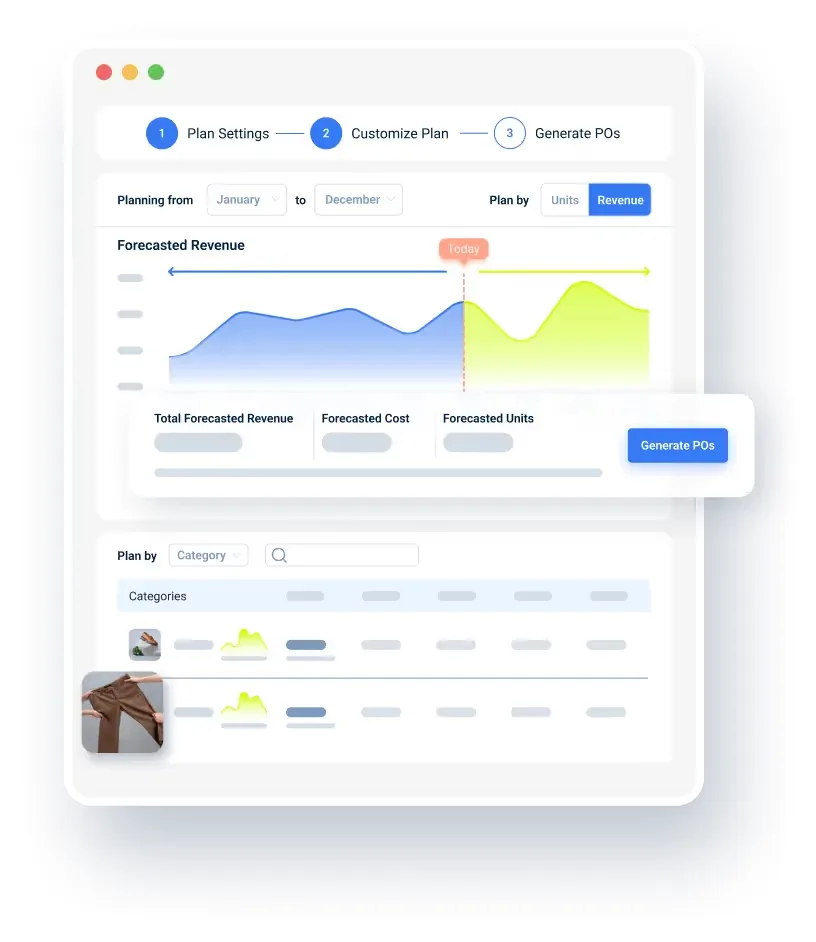
Fabrikatör is an AI inventory planning app that helps Shopify merchants replace manual spreadsheets. It's aimed at smaller teams with 50+ SKUs and six months of history, and it turns any restock recommendation straight into a PO.
Key Features
- Po Sharing: Email POs with PDF and CSV attachments
- Landed Cost: Add duty, freight, and insurance to a PO
- Split Pos: Divide one PO into several smaller ones
- Backorders: Take orders on out-of-stock products for $0.75 per backorder
Pricing
From $99/month for up to $500K in revenue per store ($79/month billed yearly). It offers a 14-day trial and a 30-day money-back guarantee.
Rating
Shopify App Store: 4.8/5 (111 reviews)
Pros
- Unlimited SKUs and users on every plan
- POs sync to QuickBooks Online and Xero
- Bundles are planned by component
Cons
- There's no separate safety-stock setting
- Several Shopify stores need matching SKUs
- You'll have to request Amazon as a custom integration
4. Inventory Planner by Sage
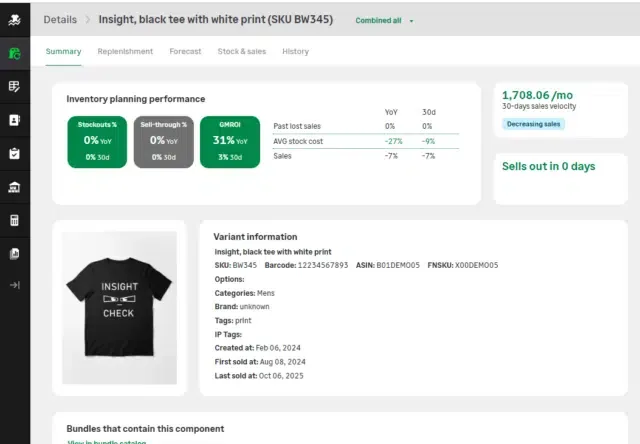
Inventory Planner by Sage is a forecasting and purchasing software for growing ecommerce brands, omnichannel merchants, and wholesalers at scale. It recommends what to buy for every location, including Amazon FBA and 3PLs.
Key Features
- Container Scaling: Size a PO by volume or weight to fill a container
- Vendor Emails: Send POs as PDF or CSV attachments
- Barcode Receiving: Receive in full or in part with a scanner
- Open-to-Buy: Plan purchases against forecasts, even for new SKUs
Pricing
There's no public pricing. Quotes depend on your replenishable variants, with unlimited users and required onboarding.
Rating
Capterra: 4.6/5 (79 reviews)
Pros
- Transfer suggestions rebalance stock before you reorder
- Bundle sales count toward their components
- It connects natively to Amazon, eBay, Walmart, and ShipBob
Cons
- Onboarding is required, so you can't start the same day
- Its main Shopify App Store listing shows it as unavailable
- MOQs and case sizes only apply on the PO, so the buying recommendation won't reflect them
5. Sumtracker
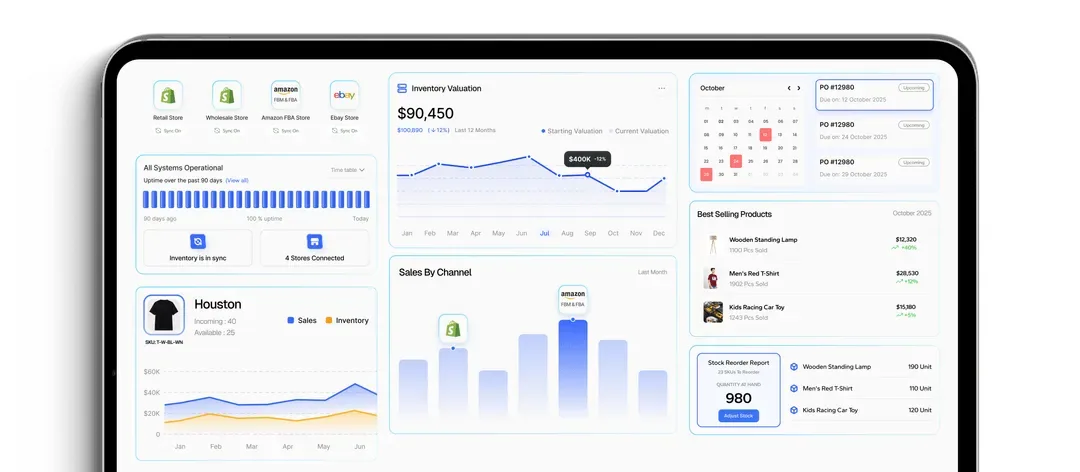
Sumtracker is an inventory management and replenishment software for Shopify and Amazon merchants. It syncs stock across channels and, on the Replenish plan, it forecasts from your last 12 months of sales and turns that into POs.
Key Features
- Emailed POs: Send POs to suppliers in one click
- Landed Costs: Calculate weighted-average landed costs automatically
- Supplier Settings: Set supplier SKU, lead time, pack size, and MOQ
- Bundle Sync: Reorder components from bundle sales
Pricing
POs need the Replenish plan, from $119/month for up to 2,500 orders a year. It comes with a 14-day free trial.
Rating
Shopify App Store: 4.8/5 (127 reviews)
Pros
- Shopify vendors become suppliers automatically
- Stock syncs across Shopify, Amazon, Etsy, eBay, and Walmart
- POs work in any currency
Cons
- The $59/month Manage plan doesn't include POs
- There's no Xero integration
- Standard plans stop at 10 warehouses and 10 channels
6. Cin7 Core
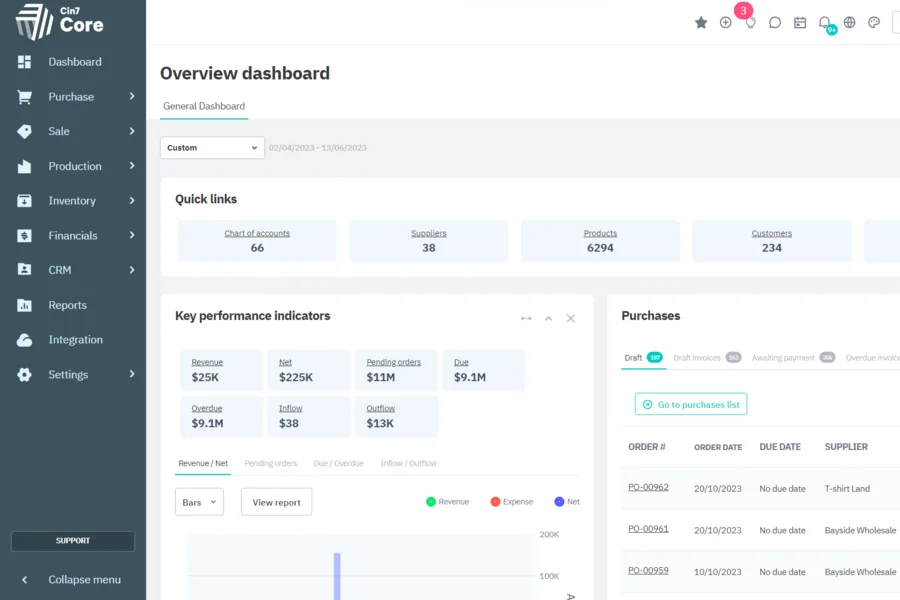
Cin7 Core fits Shopify brands that already use Cin7 for inventory and accounting. Its native purchasing module generates purchase orders against inventory records, which avoids copying supplier and stock data into a separate tool. Core also provides native Xero and QuickBooks Online sync.
Key Features
- Automatic Reorder Pos: Raise POs when stock hits its reorder point
- Velocity Suggestions: Get reorder quantities from sales, lead time, and safety stock
- Landed Cost Allocation: Spread freight by value, quantity, weight, or volume
- Dropship Purchases: Create supplier purchases automatically for dropship sales
Pricing
Standard is $349/month for 5 users and 6,000 sales orders a year. Pro is $599/month and Advanced is $1,199/month. There's a 14-day free trial period.
Rating
Capterra: 4.3/5 (739 reviews)
Pros
- Kits, bundles, and basic BOM assembly are included
- Barcode receiving supports serial and batch tracking
- You can require approval before stock is received
Cons
- Each Shopify store takes one integration slot
- Stock pushes from Cin7 Core to Shopify, but it won't pull changes back
- AI forecasting costs extra, and Cin7 doesn't publish the price
7. Finale Inventory
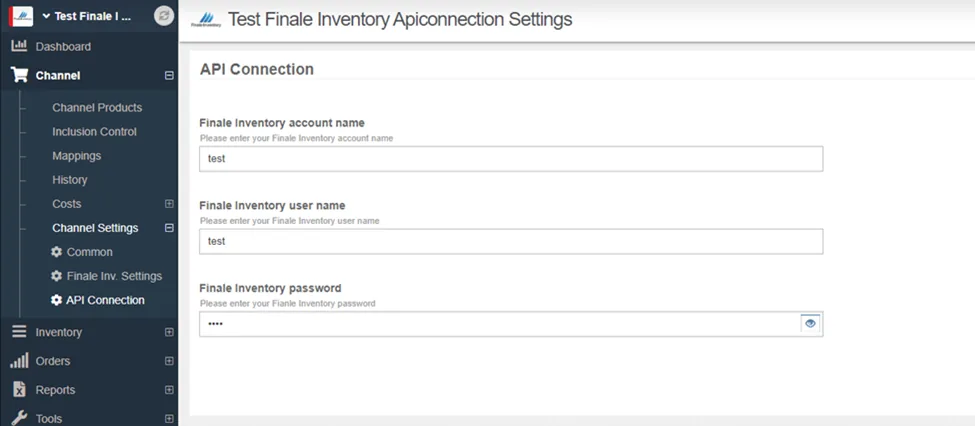
Finale Inventory, now Descartes Finale, is an inventory software for growing ecommerce brands that fulfill orders in-house. It creates POs from min/max levels, sales velocity, and safety stock.
Key Features
- Three-way Matching: Check each PO against the bill and what arrived
- Emailed POs: Send POs from templates, even to several addresses
- Landed Costs: Distribute costs by value, quantity, weight, or volume
- Pack Sizes: Round suggested orders to the supplier's pack size
Pricing
Essentials starts at $499/month and Growth at $799/month. There's no advertised free trial, and most customers sign 12- to 36-month terms.
Rating
Capterra: 4.7/5 (218 reviews)
Pros
- Shopify orders import every five minutes
- Replenishment covers Amazon FBA and AWD stock
- Barcode receiving comes with Growth and Enterprise
Cons
- Bills of materials are single-level, so it isn't a full MRP system
- There's no AI forecast, only velocity and min/max rules
- Users and integrations are hard caps, so you'll need a plan change to add one
8. Auto Purchase Orders
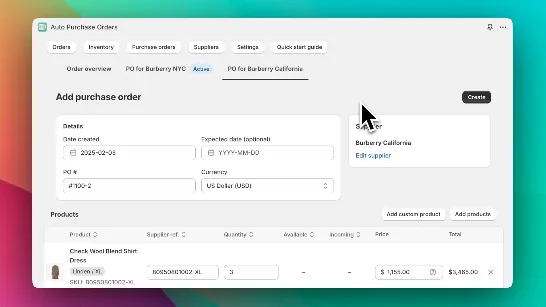
Auto Purchase Orders is a Shopify app for creating, emailing, and tracking POs. It’s built primarily for dropshipping and wholesale. In autopilot mode, it raises a PO from each new Shopify order and can send it to the supplier.
Key Features
- Custom Sending Domain: Email POs from your own domain
- Po Templates: Customize PDF and CSV templates without code
- Partial Receiving: Receive part of a PO into a chosen location
- Accounting Sync: Turn POs into Xero or QuickBooks bills
Pricing
From $39.99/month for 100 POs a month to $124.99/month for 2,500. It also provides a 14-day free trial period.
Rating
Shopify App Store: 4.9/5 (45 reviews)
Pros
- Dropship POs include the customer's shipping address
- Several orders can share one PO on higher plans
- An API, webhooks, and Shopify Flow triggers come with Professional and up
Cons
- Its docs don't cover lead times, MOQs, or reorder suggestions
- Every plan caps POs per month
- You'll need their support team to switch on incoming-stock sync
Pick The Tool That Matches How You Buy
If you only send POs and receive stock, Shopify's built-in purchase orders or a simple PO app will do. But, if you want the system to work out what to order and when, you'll want one that forecasts.
If forecasting and purchase order management need to operate as one workflow, evaluate Forstock using your own catalog, lead times, and order history. Start a 14-day free trial with no credit card, or book a 20-minute demo.change.
FAQs
Does Shopify Have Built-in Purchase Orders?
Yes. Shopify's admin has purchase orders under Products, and stock comes in through a linked transfer that handles partial shipments. But, you can't email a PO from the admin, only export a PDF. Also, lead times and MOQs aren't built-in fields.
What Replaced Stocky for Purchase Orders?
Shopify points Stocky users to the admin's built-in purchase orders after Stocky shut down on August 31, 2026. You couldn't export suppliers, and you can't import old POs. So, you'll need to rebuild suppliers in your new tool. Our guide to replacing Stocky's PO workflow covers the switch.
How Do I Know When to Reorder from a Supplier?
Reorder when stock hits your reorder point, which is the average daily sales times the supplier's lead time, plus safety stock. Supplier lead-time tracking measures how long each vendor takes to produce and deliver an order. If you sell 10 units a day, with a 30-day lead time and 7 days of safety stock, you'd reorder at 370 units.
How Do I Handle a Partial Delivery on a Purchase Order?
Receive what arrived line by line, and keep the PO open until the rest arrives or you've canceled it. In Shopify's admin, you accept, reject, or cancel each item on the linked transfer, and every tool on this list tracks partial receipts too.
How Does Purchase Order Management Differ from Inventory Management?
Inventory management records stock on hand, while purchase order management creates, tracks, and receives orders placed with suppliers. The two meet at receiving, when a PO's delivered units become stock you can sell.