
How Multi-Location Inventory Affects Sales Tax Nexus
Storing inventory across multiple states — including third-party warehouses — can create sales tax nexus; learn how to track locations, register, and automate compliance.
How Multi-Location Inventory Affects Sales Tax Nexus
Managing inventory across multiple locations can create unexpected tax obligations for your Shopify business. The key issue? Sales tax nexus - a legal connection between your business and a state that triggers tax responsibilities. Here’s what you need to know:
- Physical presence nexus: Storing inventory in a state - even in a third-party warehouse - creates tax obligations in over 20 states.
- Economic nexus: Separate from physical presence, this applies if your sales in a state exceed $100,000 or 200 transactions annually (though many states are removing the transaction threshold).
- Compliance challenges: States like California and Washington enforce back taxes for inventory stored locally, even if sales are minimal.
Key takeaway: If your inventory is stored in multiple states, you must track multi-location stock, register for sales tax permits in those states, and automate tax collection to avoid penalties. Tools like tax software and cloud inventory tools can simplify compliance and reduce errors.
Read on for actionable steps to manage nexus and stay compliant.
Avoid Massive Fines! 5 Ways You May Have Sales Tax Nexus And Not Even Know It
Managing stock across various regions is a common trigger for nexus, so it's critical to optimize inventory for multi-warehouse stores to maintain clear records for tax authorities.
sbb-itb-f0fc809
How Multi-Location Inventory Triggers Sales Tax Nexus
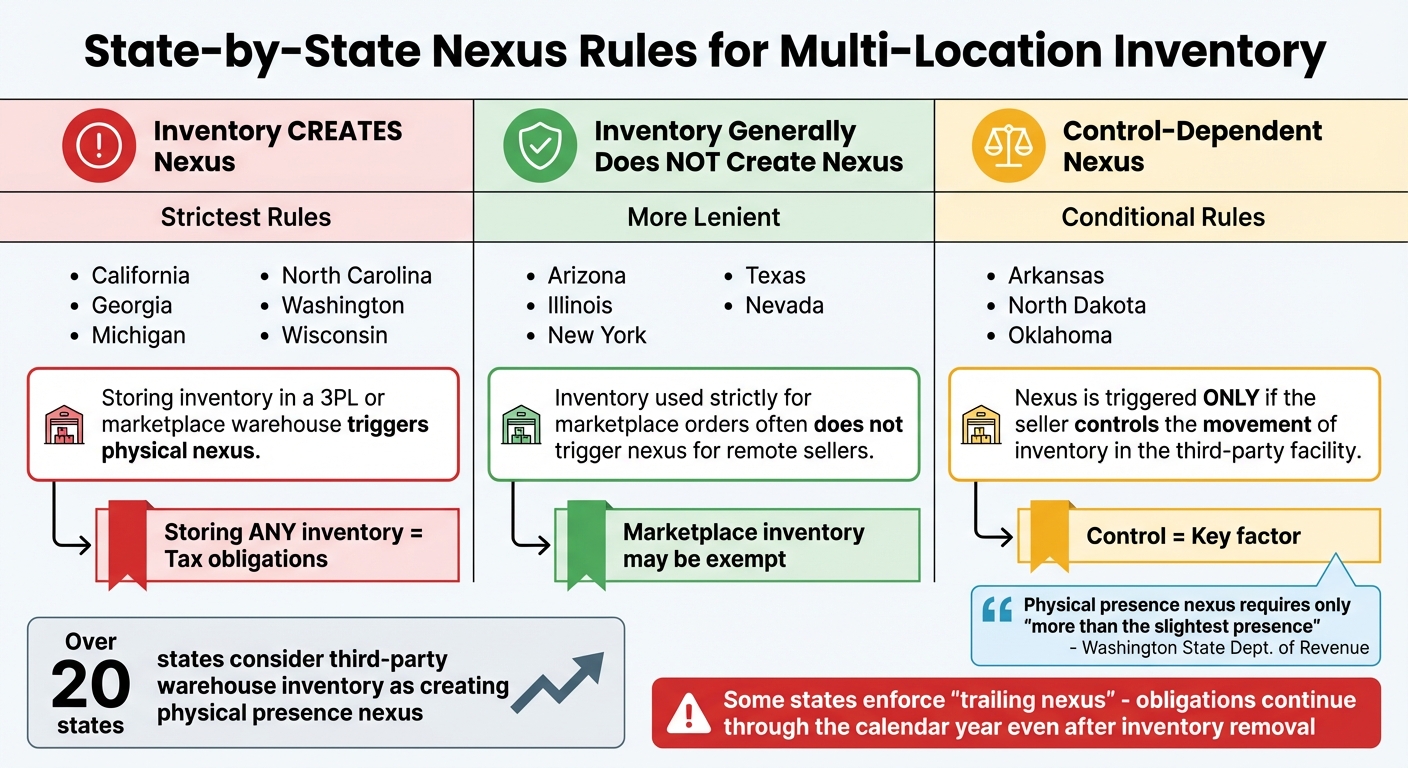
State-by-State Sales Tax Nexus Rules for Multi-Location Inventory
Physical Presence Creates Nexus
Storing inventory in a state - even in a warehouse you don’t own - creates physical presence nexus. And the bar for this is surprisingly low. As the Washington State Department of Revenue explains:
"Physical presence is a nexus standard that requires only more than the slightest presence."
This means that having inventory in a state can obligate you to register and collect sales tax, even if your sales in that state are minimal. Physical presence nexus often overrides economic nexus thresholds, making compliance unavoidable.
Third-Party Fulfillment Centers and Nexus
Things get trickier when third-party fulfillment centers are involved. More than 20 states consider inventory stored in third-party warehouses - like those used by Amazon FBA - as creating physical presence nexus. These warehouses often redistribute inventory across multiple facilities to speed up shipping, sometimes without notifying sellers. Each new warehouse location can trigger nexus in a different state. Using real-time stock sync tools can help monitor these movements across channels.
The legal landscape around this is complex. For example, in January 2024, a Washington appellate court ruled that two out-of-state sellers owed sales tax and Business and Occupation (B&O) tax for sales made through the Amazon FBA program before January 1, 2020. The court decided that simply storing goods in Washington, even temporarily, created "substantial nexus". Similarly, between April 2016 and March 2019, California held marketplace sellers liable for back sales taxes if their inventory was stored in California FBA centers. This stance was upheld despite legal challenges.
On the flip side, not all states agree. In September 2022, the Pennsylvania Commonwealth Court ruled in Online Merchants Guild v. C. Daniel Hassell that FBA inventory didn’t create sales tax nexus because merchants lose control over their goods once Amazon takes possession. This patchwork of laws makes compliance a daunting task, as the same practice can lead to tax obligations in some states but not others.
How Nexus Laws Vary by State
State-by-state differences add another layer of complexity. Tracking where your inventory is stored is crucial because states interpret nexus laws differently. For instance:
- Over 20 states, including California, Georgia, Michigan, North Carolina, and Washington, treat any inventory stored in their borders as creating nexus, regardless of who controls it.
- Close to 10 states, such as Arizona, Illinois, New York, and Texas, generally don’t consider marketplace inventory as creating nexus if the seller doesn’t control the inventory.
- A third group, including Arkansas, North Dakota, and Oklahoma, takes a middle ground: nexus is triggered only if the seller controls the movement of inventory.
Here’s a quick breakdown to simplify things:
| State Category | Example States | Nexus Rule for Inventory |
|---|---|---|
| Inventory Creates Nexus | CA, GA, MI, NC, WA, WI | Storing inventory in a 3PL or marketplace warehouse triggers physical nexus |
| Inventory Generally Does Not Create Nexus | AZ, IL, NY, TX, NV | Inventory used strictly for marketplace orders often does not trigger nexus for remote sellers |
| Control-Dependent Nexus | AR, ND, OK | Nexus is triggered if the seller controls the movement of inventory in the third-party facility |
To make matters even more complicated, some states enforce "trailing nexus". This means your tax obligations don’t end immediately after you remove inventory from a state - they often extend through the remainder of the calendar year. And it’s not just sales tax you need to worry about. For example, in Texas, storing inventory in a marketplace facility can also lead to franchise tax obligations, even if you don’t meet the sales tax threshold.
How to Stay Compliant Across Multiple Locations
Track Where Your Inventory is Stored
Keeping tabs on where your inventory is located is crucial for sales tax compliance. Many third-party logistics (3PL) providers move inventory between warehouses to speed up delivery times. As RKL CPA points out:
"The 3PL likely will distribute that inventory throughout their warehouses across the country for faster order fulfillment. This secondary distribution creates nexus in the states where the inventory is placed whether or not you know it is there."
For sellers using Amazon FBA, it’s important to regularly download Inventory Event Detail reports. These reports help you track where your inventory is initially placed. States often use data from 3PLs to identify inventory owners and pursue them for unfiled tax returns. Even a small inventory presence in a state can trigger tax obligations, regardless of whether you meet the typical economic thresholds.
Once you’ve established where your inventory is stored, the next step is to secure the appropriate sales tax permits in each state where you have nexus.
Register for Sales Tax in Nexus States
After pinpointing the states where your inventory is stored, you need to register for sales tax permits before you start collecting tax. Without a valid sales tax permit, collecting tax is not allowed. The nexus start date usually aligns with the date your inventory first arrived in that state.
If you’re an out-of-state retailer, you might need to apply for a "Sellers Permit" or a "Certificate of Registration - Use Tax" instead of a standard local permit. Most states offer online registration, allowing you to use your primary business address during the process. Once registered, the state will assign you a filing frequency - monthly, quarterly, or annually - based on your projected sales volume. Some states also enforce trailing nexus, meaning you may need to continue collecting sales tax for a set period even after your inventory is removed from that state.
Automate Sales Tax Collection and Remittance
Managing sales tax manually across over 10,000 tax jurisdictions is nearly impossible. Tax automation software simplifies this by calculating sales tax in real time based on the buyer's location while factoring in state-specific tax rules.
To streamline compliance, sync all your sales channels - whether it’s Shopify, Amazon FBA, or other platforms - with a centralized tax engine. This ensures accurate tax collection, no matter where your inventory is stored or sold. Many of these tools also offer Nexus Insights Dashboards, which alert you to new inventory locations that may create nexus. They also handle filing returns automatically, aligning with each state’s deadlines.
For Shopify brands juggling inventory across multiple locations, tools like Forstock offer a unified dashboard to monitor stock levels and warehouse performance. While Forstock specializes in inventory optimization and demand forecasting, integrating it with tax automation software provides a comprehensive view of your inventory’s locations and related tax responsibilities. This combination minimizes administrative work and helps you stay compliant as your business grows.
To stay audit-ready, run "Expected vs. Actual" reports regularly. These reports compare collected taxes with what should have been collected, helping you catch errors early. Keeping detailed digital records of all sales, taxes collected, and inventory movements is essential for navigating state audits.
How to Reduce Nexus Complexity
Consolidate Inventory When Possible
Every warehouse you operate can trigger physical nexus, which adds to your compliance workload. By consolidating inventory into fewer, strategically chosen locations, you can reduce the number of states where you're required to register and collect sales tax. Operating multiple warehouses increases tax obligations, while fewer locations help streamline compliance. For instance, using services like FBA can unintentionally create inventory nexus due to automatic distribution. Balancing the shipping advantages of multiple warehouses against the added tax complexity is critical - fewer, well-placed warehouses can make compliance much easier.
Reducing the number of inventory locations not only minimizes tax exposure but also makes it easier to integrate compliance software into your operations.
Use Technology to Simplify Compliance
Modern technology offers tools to help you stay ahead of nexus requirements. Automated dashboards can monitor inventory locations, track sales volume, and flag when you're nearing or have met state thresholds for nexus. These tools provide real-time insights, making it clear where your inventory is stored - one of the main triggers for physical nexus.
For Shopify brands managing inventory across multiple locations, platforms like Forstock offer a unified dashboard to track stock levels and warehouse performance. While Forstock focuses on demand forecasting and purchase order automation, combining it with tax compliance software creates a powerful system. This setup ensures you know where your inventory is located and what tax obligations it creates. By leveraging such technology, Shopify brands can simplify compliance and optimize inventory management, moving from manual to automated purchase orders and staying audit-ready as the business grows.
Review Your Nexus Status Regularly
Even with consolidated inventory and automation, nexus obligations can change frequently. Factors like employee relocations, new sales channels, acquisitions, and marketplace policy updates can all impact your nexus status. States also frequently update their economic thresholds and tax rules. For example, many states have shifted away from transaction-count tests to focus solely on gross revenue. This means that what was compliant a few months ago might no longer meet current regulations.
To stay compliant, schedule regular reviews - monthly, quarterly, and annually - to assess nexus exposure. If you use FBA or a 3PL provider, download "Inventory Event Detail" reports regularly to identify any new states where your inventory is stored. Don’t rely solely on memory; reconcile your general ledger, payroll, and shipment data against state nexus standards. If you discover exposure in a new state, consider pursuing a Voluntary Disclosure Agreement (VDA). This can help limit lookback periods and reduce penalties before a state initiates an audit. As Prof. Chad D. Cummings, CPA, Esq. wisely notes:
"If you think hiring a professional is expensive, wait until you hire an amateur".
Conclusion: Managing Nexus with the Right Tools
Handling multi-location inventory doesn’t have to feel like an insurmountable challenge when it comes to sales tax. The secret lies in understanding where your inventory is stored and the tax obligations tied to those locations. With online sales expected to hit $8.1 trillion by 2026 and over 12,000 tax jurisdictions in the U.S., relying on manual methods just isn’t practical anymore.
This is where the right tools come into play. Automated tax software can take the burden off your shoulders by calculating rates, filing returns, and keeping track of thresholds across states. But compliance starts with knowing exactly where your inventory is. For Shopify brands, platforms like Forstock offer real-time dashboards that monitor stock levels and warehouse performance across multiple locations. This is crucial because storing inventory in third-party warehouses creates physical nexus in more than 20 states. Staying compliant means knowing these rules - and tools like these ensure you’re not flying blind.
By combining inventory management tools with tax automation software, you can build a system that grows with your business. You’ll have a clear view of where your products are stored, know which states require registration, and be alerted when you’re nearing new thresholds. This integration reduces manual errors, prevents costly missteps, and ensures you’re prepared for audits as your business scales.
While technology simplifies compliance, it’s important to recognize that enforcement efforts are becoming stricter. States like Washington and California have already gone after remote sellers for back taxes simply because their inventory was stored locally. As the Washington Appellate Court pointed out:
"Ignorance of the law excuses no one".
Don’t wait to find out you’re non-compliant during an audit. Investing in the right tools now can save you from expensive penalties and headaches down the road.
FAQs
How do I find out what states my inventory is stored in?
Take a close look at where your inventory is stored, including your own warehouses, fulfillment centers, and third-party storage facilities like Amazon FBA. Why does this matter? Inventory stored in specific locations can create a sales tax nexus in those states, which means you may be required to collect and remit sales tax there.
To stay on top of this, keep detailed records of all storage locations. Tools like sales tax calculators or guidance from tax professionals can help you figure out where a nexus applies. This ensures you meet state sales tax requirements and avoid compliance issues.
If I remove inventory from a state, when does nexus end?
When your business no longer has a physical presence or meets the economic activity thresholds in a state, your nexus usually ends. However, some states have what's called trailing nexus. This means you might still need to handle tax obligations for a certain period even after removing your inventory from that state. To avoid any compliance issues, it's important to review the specific tax rules for each state during this transition.
What should I do if I realize I should have been registered before?
If you realize you should have registered for sales tax in a state, it’s important to act promptly. Begin by registering with the state’s tax authority, then start collecting and remitting the required taxes. You might also need to file past-due returns to get back on track. To navigate this process more effectively, consider consulting a tax professional or using compliance tools. Taking these steps shows a good-faith effort to meet tax obligations and can help minimize potential penalties.
Keep reading
Try Forstock free for 14 days.
AI-powered demand forecasting and reorder automation for Shopify brands. No credit card required.