
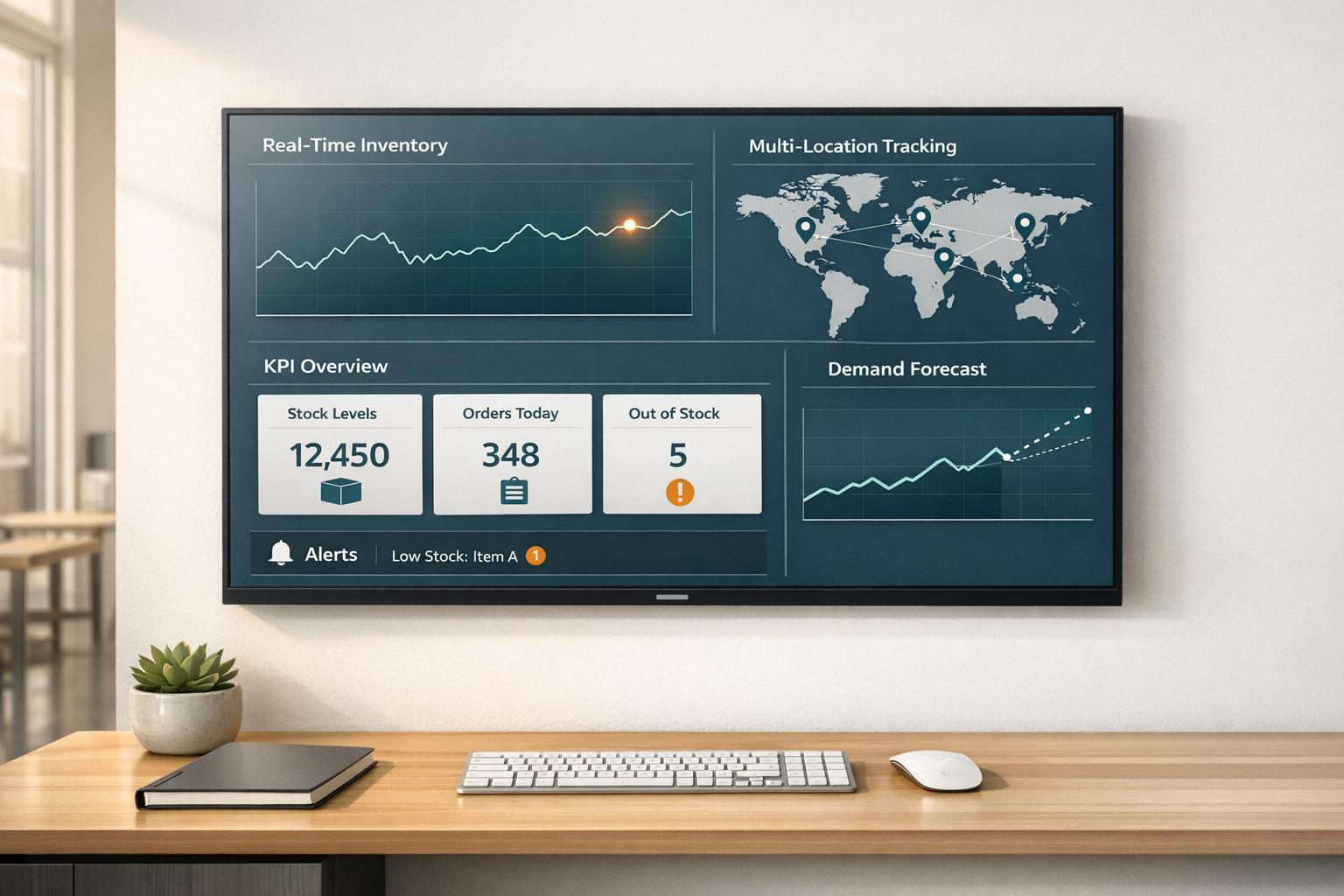
Effective inventory dashboards solve one of the biggest challenges for Shopify merchants: fragmented data that leads to stockouts, overstocking, and lost revenue. By consolidating inventory data into a single, real-time interface, these tools help businesses reduce errors, improve decision-making, and save both time and money.
Here are the five key features every inventory dashboard should include:
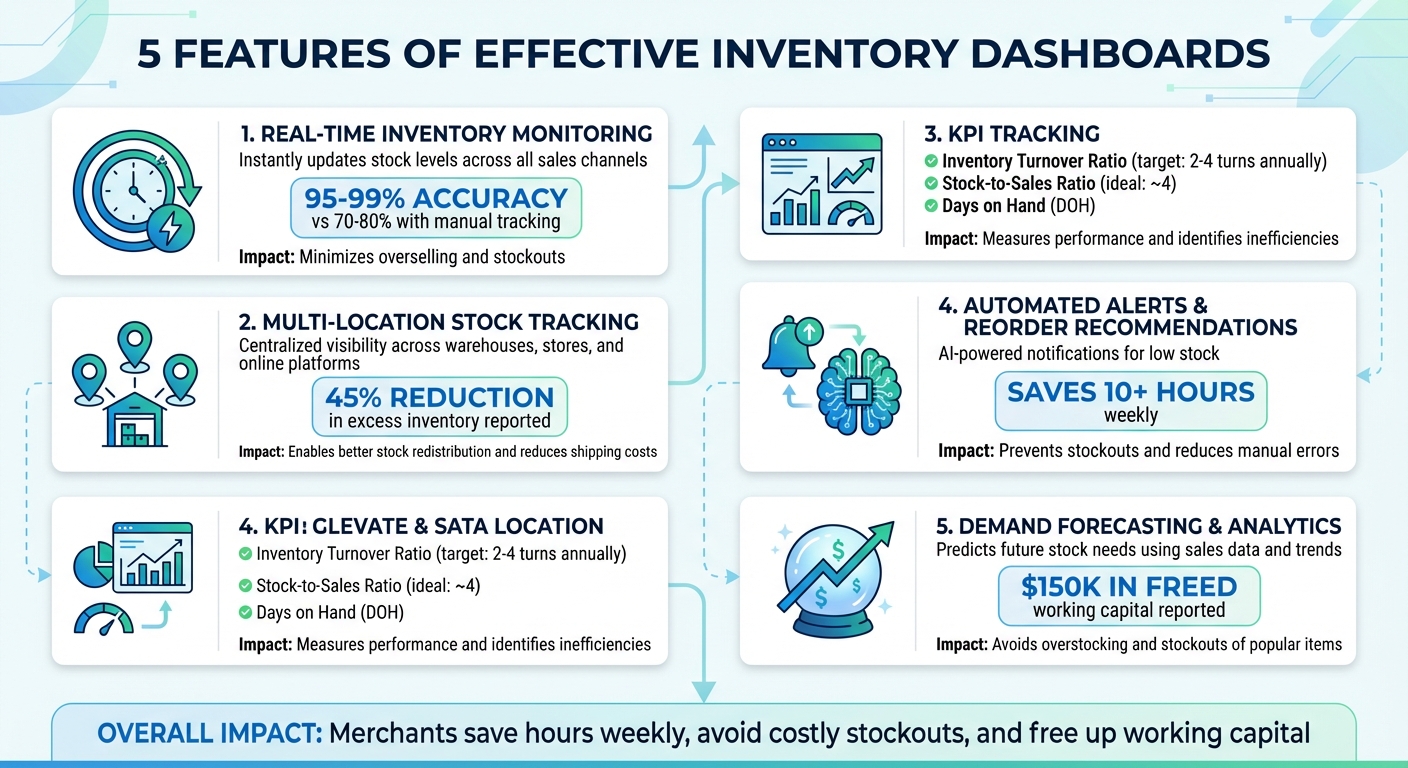
- Real-Time Inventory Monitoring: Instantly updates stock levels across sales channels and locations, minimizing overselling and stockouts.
- Multi-Location Tracking: Provides visibility into inventory across warehouses, stores, and online platforms, enabling better stock redistribution and reducing shipping costs.
- KPI Tracking: Tracks critical metrics like Inventory Turnover Ratio, Stock-to-Sales Ratio, and Days on Hand to measure performance and identify inefficiencies.
- Automated Alerts and Reorder Recommendations: Sends notifications for low stock and uses AI to suggest optimal reorder points based on trends and lead times.
- Demand Forecasting and Analytics: Predicts future stock needs using sales data, seasonal trends, and supplier lead times, helping to avoid overstocking or running out of popular items.
Merchants using these dashboards report saving hours weekly, avoiding costly stockouts, and freeing up working capital. Forstock, for example, integrates all these features starting at $79/month, making it a practical solution for Shopify businesses looking to streamline inventory management.
5 Essential Features of Effective Inventory Dashboards for Shopify Merchants
1. Real-Time Inventory Level Monitoring
A unified dashboard shines when it comes to real-time inventory level monitoring. With every sale, shipment, or return, stock levels update instantly - no more waiting until the end of the day. This seamless synchronization across warehouses, physical stores, and online platforms (like Shopify, Amazon, or your own site) minimizes the risk of overselling and keeps customers happy.
The gap between "real-time" and "almost real-time" is huge. Barcode-based tracking systems hit accuracy levels of 95% to over 99%, while manual spreadsheets lag behind at just 70%–80%. Fixing inventory errors through auditing can boost sales by about 11%.
Real-time insights also help you stay ahead of potential issues. If a product suddenly becomes a bestseller at one location, you can quickly redirect stock from slower locations to meet demand. On the flip side, if items aren't selling, the system flags them so you can create promotions and avoid deadstock. It's a critical feature - just look at 2023, when the fashion industry ended up with 2.5–5 billion excess items, translating to $70–$140 billion in lost revenue.
Daily operations benefit, too. Sales staff can instantly check stock availability without leaving customers waiting, and purchasing managers know exactly when to reorder - no more guessing based on outdated spreadsheets.
"Before Forstock, I was literally living in spreadsheets. I spent hours each week updating stock levels and trying not to miss reorder points. Since switching, I haven't had a single stockout." – Sophie, E-commerce Manager
However, not all "real-time" systems are created equal. Some enterprise dashboards still have a lag of 4 to 10 hours, depending on their setup. When choosing inventory software, make sure it offers truly instant updates. For fast-moving items or flash sales, even a few hours of delay can lead to frustrated customers and lost opportunities. Real-time visibility is the backbone of managing complex, multi-location inventories effectively.
sbb-itb-f0fc809
2. Multi-Location Stock Tracking
Handling inventory across multiple locations used to mean juggling separate systems, often leading to mismatched numbers and confusion. Automated inventory management simplifies this process by bringing all your data into one place. With automatic syncing, any sale or new stock arrival updates inventory levels across your entire network in real time. This instant synchronization makes it easier to redistribute stock strategically.
When you can’t see inventory levels clearly across locations, it can lead to costly mistakes, like overstocking in one area and shortages in another. A unified dashboard solves this by giving you a clear view of what’s in stock, where it’s located, and where it’s needed. For instance, if your Los Angeles warehouse has too much inventory while your New York store is running low, you can shift stock between locations instead of paying for expensive rush orders.
This kind of visibility also supports modern retail approaches, like Buy Online, Pick Up In-Store (BOPIS) and "ship-from-store" options. The system automatically selects the closest location with available stock, cutting down on shipping costs and delivery times. Store associates can also step in to "save the sale" by quickly checking other locations for out-of-stock items, keeping customers happy and avoiding missed opportunities.
"We reduced excess inventory by 45% and freed up $150K in working capital." – Jason, Co-founder, HomeGoods
Forstock’s dashboard even lets you set reorder thresholds tailored to each location’s needs. For example, a busy Manhattan store might require higher safety stock levels than a quieter suburban warehouse. The system adjusts recommendations based on how fast products move at each site, ensuring your inventory stays balanced and efficient.
3. Key Performance Indicator (KPI) Tracking
Tracking key performance indicators (KPIs) helps you measure whether your inventory management is hitting its targets. One critical metric is the Inventory Turnover Ratio, which tells you how often you sell and replace stock within a certain period. Most brands aim for 2 to 4 turns annually. If your turnover falls below 2, it could mean you're overstocking or holding onto slow-moving items that tie up cash. Another important metric, the Stock-to-Sales Ratio, compares the value of your inventory to your actual sales. A ratio around 4 is often considered ideal, striking a balance that avoids excessive storage costs. After these, it’s essential to keep an eye on cost-related metrics to understand how your budget is being affected.
"Inventory metrics are the difference between guessing and knowing - the essential key performance indicators (KPIs) that provide real-time knowledge of your inventory management." – Shopify Staff
Inventory Carrying Costs are another hidden factor to watch. These include storage fees, insurance, taxes, and even the cost of obsolete stock. Monitoring this metric can help you identify when holding excess inventory costs more than the profit it brings in. Then there’s Days on Hand (DOH), which converts your turnover into a time-based measure. This shows how long it takes to sell through your inventory. Lower DOH numbers mean quicker cash flow - a must for growing businesses that need capital to reinvest. For those on Shopify, following an inventory turnover guide can help fine-tune these cycles.
To make tracking easier, color-coded alerts can instantly flag problems. For example, red signals stockouts, yellow warns of items nearing reorder thresholds, and green indicates healthy stock levels. This system saves time by letting your team spot issues without combing through endless spreadsheets. Another must-watch metric is Inventory Accuracy, which measures how well your physical counts match your system records. A minimum of 97% accuracy is crucial before you can trust any other data. Without reliable numbers, every decision becomes a risky guess.
Tools like Forstock’s dashboard simplify KPI tracking by automatically updating metrics daily. Instead of static snapshots, you get trend lines for better insight. You can even assign team members to oversee specific metrics, ensuring that red flags are investigated within 48 hours and root causes are addressed. This approach turns raw data into meaningful, actionable insights.
4. Automated Alerts and Reorder Recommendations
Keeping track of stock levels for countless SKUs by hand is a time sink. Automated alerts step in to notify you the moment inventory dips below your set reorder points. You can ditch the spreadsheets and daily manual checks - these systems highlight exactly which products need attention. With this clear prioritization, your team can focus on replenishing stock without getting bogged down in data.
But alerts are just the beginning. AI-powered recommendations take inventory management to the next level. These advanced tools analyze factors like sales trends, supplier lead times, and even seasonality to suggest reorders before stock levels get critical. For instance, if an item takes two weeks to arrive, the system calculates the ideal reorder date based on how quickly it’s selling. This forward-thinking approach bridges the gap between identifying low stock and restocking in time.
"The automated PO creation saves us 10+ hours weekly. Setup was seamless - just 2 minutes!" – Alexander, Supply Chain Manager, FashionCo
Automation also cuts down on mistakes. While manual tracking is about 70% accurate, automated systems sync with your point-of-sale and e-commerce platforms to hit over 95% accuracy. Every sale updates inventory counts instantly, triggering alerts as soon as thresholds are crossed. This real-time tracking helps close the "visibility gap" that often hampers manual methods.
Platforms like Forstock go a step further by automatically generating purchase order drafts when stock reaches critical levels. These drafts include recommended quantities based on demand forecasts, so all you have to do is review and approve. This feature alone can save supply chain teams over 10 hours a week. One operations leader even reported avoiding $50,000 in monthly stockout costs, thanks to AI-driven predictions. By reducing errors and streamlining processes, automation sets the stage for smarter, more proactive inventory management.
5. Demand Forecasting and Analytics
Forecasting takes the guesswork out of inventory planning. By analyzing sales data - usually spanning 30 days to 12 months - forecasting tools identify demand patterns, such as seasonal spikes during holidays like Christmas or Black Friday, and long-term shifts in customer behavior. Techniques like time-series analysis and moving averages transform raw data into predictions you can act on. These insights drive smarter decisions, with both operational and financial advantages.
Take this example: In late 2014, a consumer goods company used demand planning analytics to navigate labor issues at the Long Beach port. Anticipating a strike, they extended lead times and expedited shipments, ensuring their shelves were stocked for the two crucial weekends before Christmas. Meanwhile, competitors’ goods were stuck in port. The result? Record sales and a boost in market share. Another brand leveraged AI-driven forecasting to cut excess inventory by 45%, freeing up $150,000 in working capital.
These tools don’t just look backward; they also predict future needs. Advanced dashboards automate tasks like setting reorder points and safety stock levels based on demand forecasts and supplier lead times. For example, if your supplier takes two weeks to deliver and you sell 50 units daily, the system calculates you’ll need about 700 units in stock before placing your next order. Platforms like Forstock enhance this process by offering 12-month demand plans that adjust in real time to trends, lead times, and seasonal patterns, making inventory management more proactive.
The 80/20 rule is key here: around 80% of your sales often come from just 20% of your products. Analytics help identify these top sellers, ensuring you avoid stockouts. When calculating forecasts, exclude days when items were out of stock - otherwise, you’ll underestimate demand. And for seasonal planning, compare data from the same period in previous years to get a clearer picture. Forecasting shifts inventory management from reactive problem-solving to a forward-thinking strategy.
Conclusion
The five features highlighted - real-time monitoring, multi-location tracking, KPI tracking, automated alerts, and demand forecasting - are game-changers for Shopify merchants managing inventory. With real-time data and visibility across locations, merchants gain a single, reliable source of truth. Meanwhile, forecasting and automated alerts enable proactive reordering, reducing reliance on scattered spreadsheets and eliminating costly manual errors.
This streamlined system doesn’t just simplify operations - it delivers measurable financial benefits. Companies using cloud inventory tools have reported saving tens of thousands of dollars monthly and improving working capital management. By preventing stockouts and ensuring products are always available, these tools also enhance customer satisfaction and build stronger brand loyalty. Merchants have saved over 10 hours each week through automation, avoided expensive stockouts, and unlocked significant working capital through smarter inventory practices.
"I open the dashboard in the morning and instantly know what needs reordering, what is overstocked, and what to focus on." – Emily, Inventory Manager
For Shopify merchants, Forstock brings all these features together in one powerful dashboard. With plans starting at $79/month, you can start your 14-day trial today and take control of your inventory while meeting customer demand with confidence.
FAQs
How does real-time inventory tracking help avoid stockouts and overstocking?
Real-time inventory tracking gives businesses a clear, up-to-the-minute view of their stock levels. This means you can make quick, informed decisions - whether it's restocking a hot-selling item or avoiding over-purchasing products that might just sit on the shelf. By keeping a close eye on inventory as it changes, you can adapt to demand shifts, minimize stockouts, and prevent tying up money in excess inventory.
Tools like Forstock's unified dashboard make this process even smoother. They centralize all your inventory data in one place, helping streamline operations and align purchasing decisions with actual, real-time demand. The result? Improved operational efficiency, healthier cash flow, and happier customers.
What are the advantages of tracking inventory across multiple locations for Shopify merchants?
Tracking inventory across multiple locations gives Shopify merchants up-to-the-minute insights into stock levels at each site. This helps avoid issues like stockouts and overstocking, ensuring products are available where they’re needed most. The result? Happier customers and increased sales.
Merchants can also distribute inventory more effectively by aligning stock with regional demand. Plus, the ability to transfer stock between locations means excess inventory at one site can be used to replenish another, reducing waste and cutting down on operational costs.
For businesses on the rise, managing inventory across multiple locations becomes a must. It keeps supply chains organized and ensures inventory data stays accurate and synchronized across all stores and sales channels. This kind of efficiency empowers merchants to make smarter decisions and grow their operations confidently.
How do automated alerts and AI recommendations help improve inventory management?
Automated alerts and AI-powered recommendations are changing how businesses handle inventory by offering real-time insights that simplify decision-making. Alerts instantly inform managers when stock levels are running dangerously low or nearing a potential stockout. This ensures timely reordering, preventing both lost sales and excess inventory. Plus, it takes away the hassle of constant manual monitoring, helping businesses maintain the right stock levels effortlessly.
AI recommendations go a step further by analyzing historical sales data, seasonal trends, and demand patterns. They provide smart suggestions for reorder quantities and the best timing, cutting down on errors and making procurement more efficient. These insights improve demand forecasting, helping businesses save time, reduce costs, and consistently meet customer needs without guesswork.