
The True Cost of Overstocked Inventory
How excess inventory ties up cash, raises storage and fulfillment costs, increases waste, and how AI forecasting and automated replenishment can prevent losses.
The True Cost of Overstocked Inventory
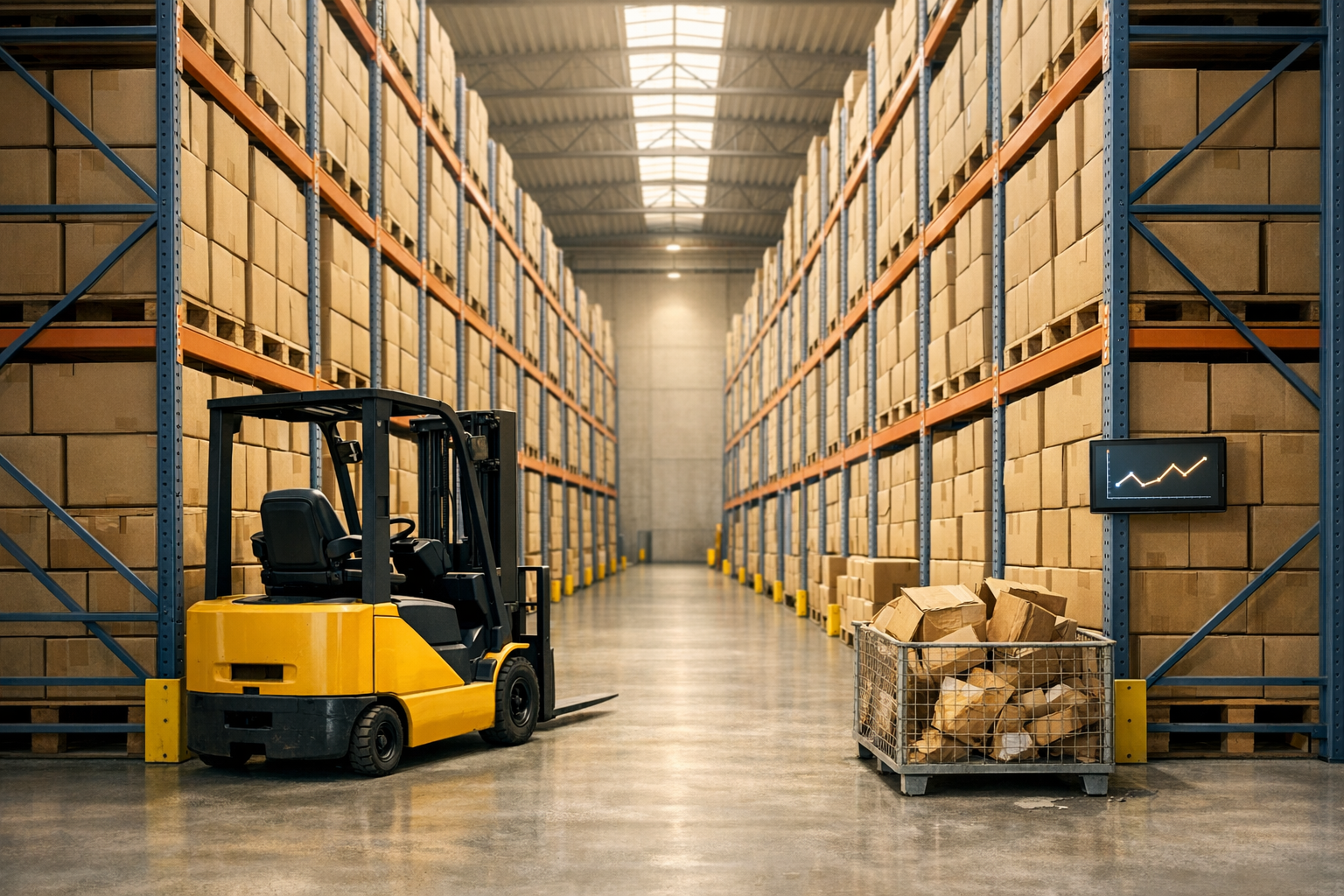
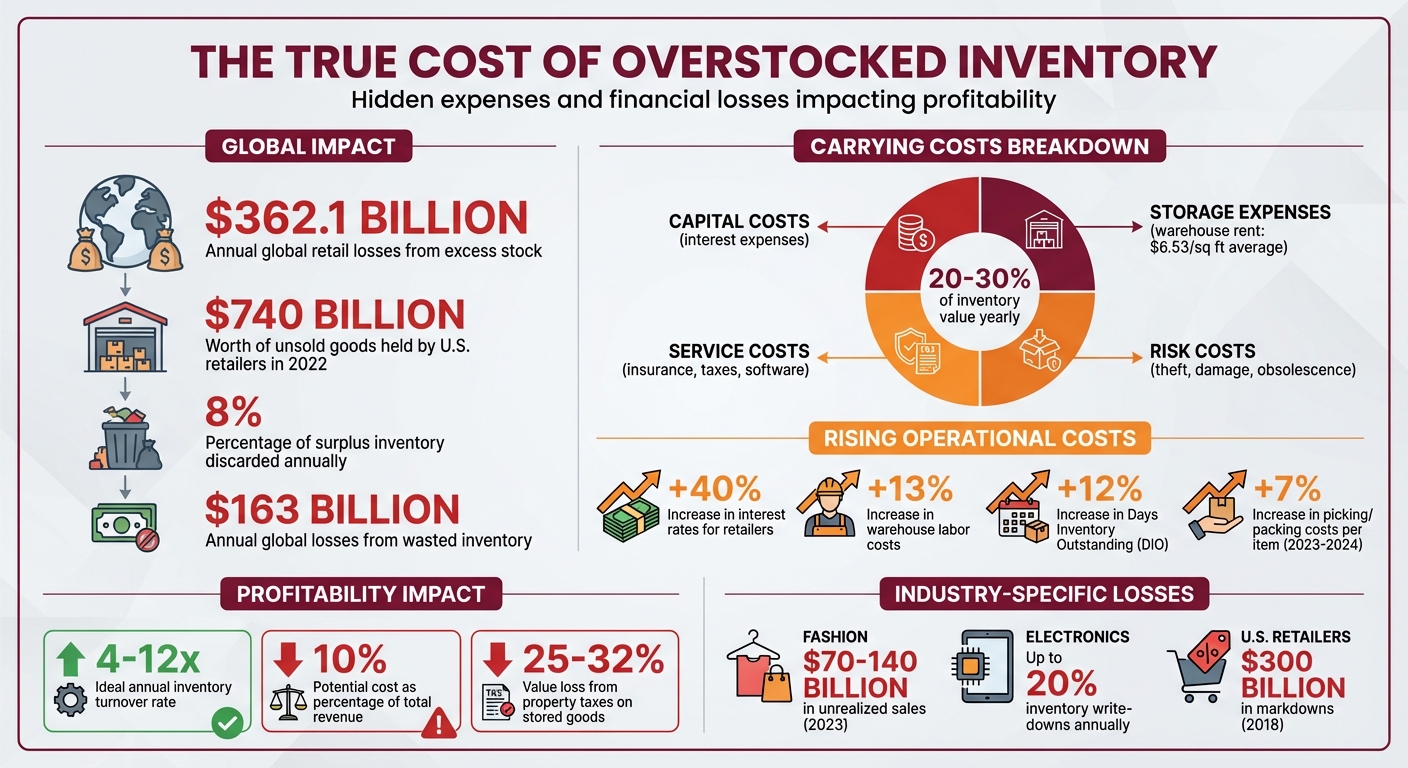
Overstocked inventory is a hidden drain on your business. It locks up cash, inflates costs, and reduces profits. Globally, retailers lose $362.1 billion annually due to excess stock, with U.S. retailers alone holding $740 billion worth of unsold goods in 2022. Here's what you need to know:
- Carrying costs: Holding inventory costs 20%-30% of its value yearly, including storage, insurance, and risk of obsolescence.
- Profit impact: Overstocked items lead to markdowns, liquidation losses, and lower inventory turnover.
- Operational strain: Excess stock clogs warehouses, increases labor costs, and risks damage or theft.
- Environmental waste: 8% of surplus inventory ends up discarded, wasting resources and adding to emissions.
The solution? Use data-driven tools like AI forecasting and cloud inventory tools to optimize stock levels, reduce waste, and free up cash flow. Every dollar tied up in unsold inventory is a missed opportunity to grow your business.
The True Cost of Overstocked Inventory: Key Statistics and Financial Impact
Financial Costs of Overstocked Inventory
Carrying Costs and Tied-Up Capital
Unsold inventory doesn’t just sit idly - it eats into your resources. Annual carrying costs can range between 20% and 30% of the inventory's total value. For instance, if a business holds $100,000 worth of overstock, it may lose $20,000 to $30,000 every year.
These costs are made up of several components:
- Capital costs: The funds tied up in inventory, including interest expenses.
- Storage expenses: This includes warehouse rent (averaging $6.53 per square foot), utilities, labor, and maintenance.
- Service costs: Think insurance, taxes, and inventory management software.
- Risk costs: The potential for theft, damage, or items becoming obsolete.
And let’s not forget the opportunity cost - the revenue a business misses out on because its capital is locked in inventory rather than being used for growth.
"Many businesses underestimate their true inventory holding costs because they fail to account for hidden expenses like opportunity costs and obsolescence risks", notes Barry Kukkuk, Co-founder and CTO at Netstock.
The problem has worsened with rising operating costs. Since 2021, interest rates for retailers have climbed 40%, while warehouse labor costs have jumped 13%. These increases make it harder to maintain healthy inventory turnover and profit margins.
Effects on Inventory Turnover and Profitability
Inventory turnover, a key metric, shows how often a business sells and replaces its inventory within a year. Ideally, turnover rates should fall between 4 and 12 times annually. Overstock disrupts this balance, causing products to sit longer, which ties up capital and inflates storage costs.
Another related metric, Days Inventory Outstanding (DIO), tracks how many days items remain in storage. From 2021 to 2024, the average DIO for U.S. retailers rose by 12%. Longer storage times increase the chance of obsolescence or damage while adding to insurance and storage fees.
Low turnover directly affects profitability. Consider TechCraft Innovations, an electronics manufacturer. With an inventory valued at $350,000, the company faced annual holding costs of $76,500, translating to a carrying cost rate of 21.86%. That’s nearly a quarter of their inventory value consumed by holding costs - money that could’ve been reinvested elsewhere. When financial pressures mount, businesses often resort to markdowns to clear stagnant stock, further squeezing profits.
Markdowns and Liquidation Losses
When holding costs spiral, markdowns often become the only way to offload excess inventory. Unfortunately, these price cuts shrink profit margins, sometimes forcing businesses to sell items at or below cost just to free up space and cash.
A striking example is Target Corporation in June 2022. After over-purchasing during pandemic supply chain disruptions, CEO Brian Cornell took decisive action. The company introduced steep markdowns, scaled back upstream stock levels to better align with demand, and canceled unnecessary vendor orders. These measures helped stabilize the company and improve profitability by 2023.
On a global scale, nearly 8% of surplus stock goes to waste, translating to $163 billion in lost inventory annually. For many businesses, excess inventory can cost as much as 10% of their total revenue. When items become unsellable - whether due to expiration, damage, or obsolescence - they must be written off, turning what was once an asset into a financial loss.
Operational Challenges and Risks from Overstock
Storage Space and Handling Constraints
Excess inventory can quickly overwhelm available storage space. When warehouses reach capacity, businesses often resort to costly alternatives like renting trailers or offsite facilities. Considering that warehouse rent averages $6.53 per square foot, these additional spaces can significantly strain budgets.
But the problem isn't just about running out of room. Overstocked facilities require constant reshuffling - products are moved repeatedly to make space for new arrivals, pallets are shifted to access buried items, and congested aisles slow operations. Each unnecessary movement adds to labor expenses and increases the risk of product damage. Since 2021, warehouse labor costs have risen by 13%. Poor inventory management and a failure to forecast inventory costs further compound the issue, contributing to global supply chain losses of approximately $626.5 billion. Even underutilized spaces within warehouses add to fixed costs, such as heating, cooling, and maintenance. Worse, shelf space occupied by slow-moving items could be used for fast-selling products that generate higher profits. These physical and financial pressures not only disrupt operations but also make warehouses more prone to shrinkage.
Shrinkage from Damage and Theft
Storing excess inventory for extended periods increases the likelihood of shrinkage caused by theft, damage, errors, or spoilage. Even a modest 1% shrinkage rate can result in significant annual losses. Overcrowded warehouses are harder to monitor, creating opportunities for shoplifting, employee theft, and fraud to go unnoticed. Additionally, disorganized storage conditions heighten the risk of products being scratched, crushed, or deteriorating over time. Businesses holding large amounts of slow-moving inventory may also face insurance premium hikes of up to 20%.
Higher Fulfillment Costs
Overstocked facilities don't just lead to physical risks - they also complicate fulfillment processes. Managing excess inventory often disrupts workflows, forcing staff to spend time rebalancing stock or transferring items between locations instead of focusing on growth. Navigating cluttered, overstocked spaces slows down picking times, and from 2023 to 2024, the cost of picking and packing a single item increased by 7%.
"Overstock is not a problem of excess product. It's a problem of misallocated resources." - Toolio
The financial burden doesn’t stop there. Utility bills for electricity, heating, and cooling can climb by tens of thousands annually in large-scale operations. Additionally, property taxes on stored goods can cause excess inventory to lose 25% to 32% of its total value.
The Trade-Offs of Carrying Too Much or Too Little Inventory
Finding the right balance requires monitoring inventory turnover metrics to ensure capital isn't trapped in stagnant stock.
Product Quality and Obsolescence
Overstocking doesn’t just strain finances and operations - it can also harm product quality and speed up obsolescence.
Physical Deterioration and Expiration
Keeping products in storage for too long often reduces their value. Globally, about 8% of inventory is lost each year to spoilage, damage, and overproduction, amounting to over $160 billion in losses. Items like perishable foods, fragile goods, and products with limited shelf lives are particularly susceptible to damage or decay while waiting to be sold.
Additionally, excess stock comes with ongoing risks that chip away at profit margins. In some cases, the costs of storing inventory - such as rising warehouse rents and labor expenses - can outweigh the value of the goods themselves, making destruction a more cost-effective option.
Trend Obsolescence in Fast-Moving Industries
Industries like fashion and electronics face even greater challenges with overstock. For instance, the fashion industry produced between 2.5 billion and 5 billion excess items in 2023, representing $70 billion to $140 billion in unrealized sales. Rapidly changing micro-trends can cause demand to fluctuate by as much as 300% annually. Meanwhile, ultra-fast-fashion brands have condensed production cycles to as little as 15 days, leaving slower-moving competitors struggling to keep up.
To combat these issues, some companies have turned to markdowns and refined inventory strategies. Nike, for example, saw markdowns affect 44% of its total assortment in 2024, compared to just 19% in 2022.
Similarly, consumer electronics companies face the challenge of rapid technological obsolescence. Some brands write down as much as 20% of their inventory value each year because products become outdated so quickly. Overstocked inventory ties up capital that could otherwise be used for marketing, innovation, or seizing new opportunities. This devaluation not only impacts short-term profits but also undermines brand trust and pricing stability.
Impact on Brand Value
When products lose value due to physical deterioration or shifting trends, profitability takes a hit. Frequent deep discounts to clear overstock can train customers to wait for sales, eroding long-term pricing power. In 2018, markdowns cost U.S. nongrocery retailers an estimated $300 billion - about 12% of total sales - with an average full-price sell-through rate of only 60%.
"The biggest contributor [to markdowns] is reduced demand due to external factors... However, misjudgments regarding inventory account for a total of 53% of unplanned markdown costs." - Coresight Research
Selling products close to their expiration or delivering damaged goods can also harm customer trust and tarnish a brand's reputation. In 2023, luxury giants LVMH and Kering reported a combined excess inventory of nearly €5 billion ($5.4 billion), with impaired inventory making up 4% to 8% of their total sales. Adding to the pressure, new regulations like the EU's Ecodesign for Sustainable Products Regulation will ban the destruction of unsold textiles by 2026, turning overstock from a financial headache into a legal risk.
sbb-itb-f0fc809
Environmental Impact of Overstocked Inventory
When discussing overstocked inventory, the focus often lands on financial and operational costs. However, the environmental consequences are just as pressing. Products that never reach customers leave behind a trail of wasted resources, energy, and emissions - from their production to eventual disposal.
Waste from Unsold Goods
Globally, about 8% of inventory is lost or discarded due to spoilage, damage, or overproduction, amounting to over $160 billion annually. In Australia alone, more than $4.5 billion worth of new, unsold goods are thrown away every year. High storage costs often compel businesses to discard excess inventory rather than hold onto it.
"With the increases in warehouse rents and labor rates, sometimes simply holding onto inventory is more costly than disposing of it." – AlixPartners
Industries like fashion are particularly wasteful, with overproduction adding to landfills and environmental strain. To combat this, regulations are emerging. For instance, the EU's Ecodesign for Sustainable Products Regulation will prohibit the destruction of unsold textiles and footwear by 2026, pushing brands to find alternative solutions. Similarly, California's Extended Producer Responsibility program, passed in August 2024, mandates apparel companies to develop collection, repair, and recycling plans by 2030. These measures aim to curb the energy consumption and carbon emissions tied to wasteful practices.
Energy Consumption and Emissions
Excess inventory doesn’t just sit idle - it consumes energy. Climate-controlled warehouses require constant power for lighting and temperature regulation, even for goods that may never sell. Temporary storage facilities and frequent inter-location transfers further drive up energy use and emissions.
Moving unsold products between locations or shipping them to disposal facilities adds to transportation-related fuel consumption. On top of that, the carbon footprint of manufacturing goods that end up discarded represents a massive environmental cost. These factors highlight the need for more sustainable inventory management in e-commerce.
Sustainability Challenges in E-commerce
The rise of e-commerce has introduced additional sustainability hurdles. Omnichannel fulfillment and rapidly changing online trends make demand prediction more complex, often leading to localized inventory surpluses. Currently, 60% of brands are falling short of their own sustainability and emissions goals, with excess inventory being a major roadblock.
Some companies, however, are taking steps to address this issue. In June 2022, Target Corporation launched a bold initiative to streamline its inventory after pandemic-era supply chain disruptions. CEO Brian Cornell’s plan - focused on holding inventory upstream and canceling unnecessary orders - helped the company recover and return to profitability in 2023. Similarly, Hugo Boss invested over €150 million ($163 million) in digital tools and analytics by mid-2024, achieving a 3.4 percentage point improvement in its inventory-to-sales ratio compared to the prior year.
Regulatory pressures are also mounting. Starting in 2025, the EU will require brands to disclose how they manage excess stock, with bans on destruction following in 2026. These changes are forcing businesses to rethink their inventory strategies - not just to comply with new laws but to align with broader sustainability goals.
Data-Driven Solutions to Prevent Overstock with Forstock
Overstock can drain finances, disrupt operations, and create waste. Tackling this issue requires smart, data-informed strategies. Forstock helps Shopify brands stay ahead of overstock problems through AI-powered demand forecasting, automated reorder management, and unified analytics. Let’s break down how these tools work to solve inventory challenges.
AI-Powered Demand Forecasting
Forstock uses AI to analyze historical sales, turnover rates, and seasonality patterns, spotting overstock risks before they become costly problems. Forget static spreadsheets or guesswork - this platform adapts dynamically to real-time data. By identifying cooling demand in specific categories, it helps businesses avoid over-investing in stock that won’t sell.
The system also suggests actionable strategies, like applying markdowns to slow-moving products or automating reorders for popular items. These measures ensure inventory stays optimized and capital isn’t wasted on unsold goods.
Automated Reorder and Safety Stock Management
Manual reordering can be riddled with errors, and static reorder points often miss the mark when demand fluctuates or supplier lead times shift. Forstock’s dynamic replenishment system steps in with real-time data and statistical models to ensure restocking happens only when it's truly needed. This approach consistently achieves impressive fill rates of 95% to 98%.
Unified Shopify Integration and Analytics

Forstock integrates directly with Shopify, pulling 12 months of historical data and seasonality trends to keep forecasts up-to-date. Its unified dashboard brings together data from all inventory channels, removing silos and giving businesses a clear, comprehensive view.
The platform sends low-stock alerts based on real-time sales trends and lead times, ensuring reorders are timely and efficient. It also highlights dead stock and underperforming SKUs, allowing businesses to liquidate these items and free up working capital. To top it off, Forstock tracks supplier performance - monitoring lead times and shipment reliability - so planners can fine-tune safety stock levels and avoid overstocking buffer inventory.
"Every dollar tied up in unsold inventory is a dollar that could have been invested in higher-performing SKUs, emerging trends, or deeper customer experiences." – Toolio
Conclusion
Excess inventory does more than just sit on shelves - it drains resources and eats into profits. Financially, it impacts cash flow by tying up working capital, racks up carrying costs (20%–30% of the inventory’s value), and gets hit with rising markdowns and a 40% increase in interest expenses since 2021. Just in 2023, retailers lost a staggering $562 billion due to overstocking.
Operationally, the impact is just as damaging. Overstock clogs warehouses, drives up labor costs, and increases shrinkage from damage, theft, or expiration. These disruptions pull attention away from innovation and customer service. On top of that, there’s an environmental toll - unsold goods, especially in sectors like food and electronics, often end up as waste in landfills.
"Overstock is not a problem of excess product. It's a problem of misallocated resources." - Steph Byce, Director of Demand Gen, Toolio
The solution? Move away from last-minute clearance sales and focus on proactive, data-driven inventory management. Forstock’s AI-powered forecasting, automated replenishment, and seamless Shopify integration offer brands the tools they need to optimize stock levels before issues arise. This approach not only frees up cash flow but also reduces waste and supports sustainable growth.
Every dollar tied up in unsold inventory is a missed opportunity to invest in top-performing products, marketing, or innovation. Smarter inventory management isn’t just a nice-to-have - it’s the key to reclaiming lost capital and fueling long-term growth.
FAQs
How does AI-powered forecasting help prevent overstocking?
AI-powered forecasting takes the guesswork out of inventory management by offering detailed demand predictions rooted in sales trends, seasonal fluctuations, and lead times. By identifying patterns and delivering actionable insights, it helps businesses order just what they need, exactly when they need it, cutting down on the chances of overstocking.
With these data-driven insights, companies can free up cash flow, lower storage expenses, and reduce waste - all while staying on top of customer demand. This efficient method not only streamlines inventory management but also frees up time and resources, letting businesses channel their energy into scaling and growth.
What are the environmental consequences of having too much inventory?
Excess inventory isn't just a business challenge - it has serious environmental repercussions. When unsold products pile up, they often end up in landfills, contributing to waste and environmental harm. In fact, studies reveal that about 8% of inventory is lost annually due to spoilage, damage, or overproduction. This waste doesn't just affect the products themselves; it also squanders the resources used for manufacturing, transportation, and packaging.
Some companies take it a step further by destroying unsold goods instead of opting for recycling or donation. Methods like burning or discarding excess stock release unnecessary carbon emissions, adding to pollution and environmental strain.
The solution? Smarter inventory management and better demand forecasting. These practices can help businesses avoid overstock, cut down on waste, and build supply chains that are more mindful of their environmental impact.
Why does overstocked inventory lead to higher carrying costs?
Overstocked inventory can be a hidden drain on your resources. It ties up capital that could be invested in other areas of the business, limiting your flexibility. On top of that, excess stock means higher costs for storage, insurance, and handling. And let’s not forget the risk - items sitting too long are more likely to become obsolete, damaged, or even lost, adding to the financial burden.
Streamlining inventory management helps cut these avoidable costs. By doing so, businesses can redirect resources toward growth opportunities and improving profitability.
Keep reading
Try Forstock free for 14 days.
AI-powered demand forecasting and reorder automation for Shopify brands. No credit card required.