
Why Stockouts Are Killing Your Shopify Store
Stockouts are one of the most expensive problems a Shopify brand can face. When a customer lands on your product page and sees "Out of Stock," you don't just lose that sale — you risk losing that customer forever. Studies show that 70% of shoppers will buy from a competitor rather than wait for your item to come back in stock.
Beyond lost revenue, stockouts damage your brand reputation, tank your SEO rankings (Google notices when pages stop converting), and create a vicious cycle where you're constantly playing catch-up.
The Root Causes of Stockouts
Most stockouts aren't caused by sudden demand spikes. They're caused by poor visibility and manual processes:
- Spreadsheet-based tracking that's always out of date
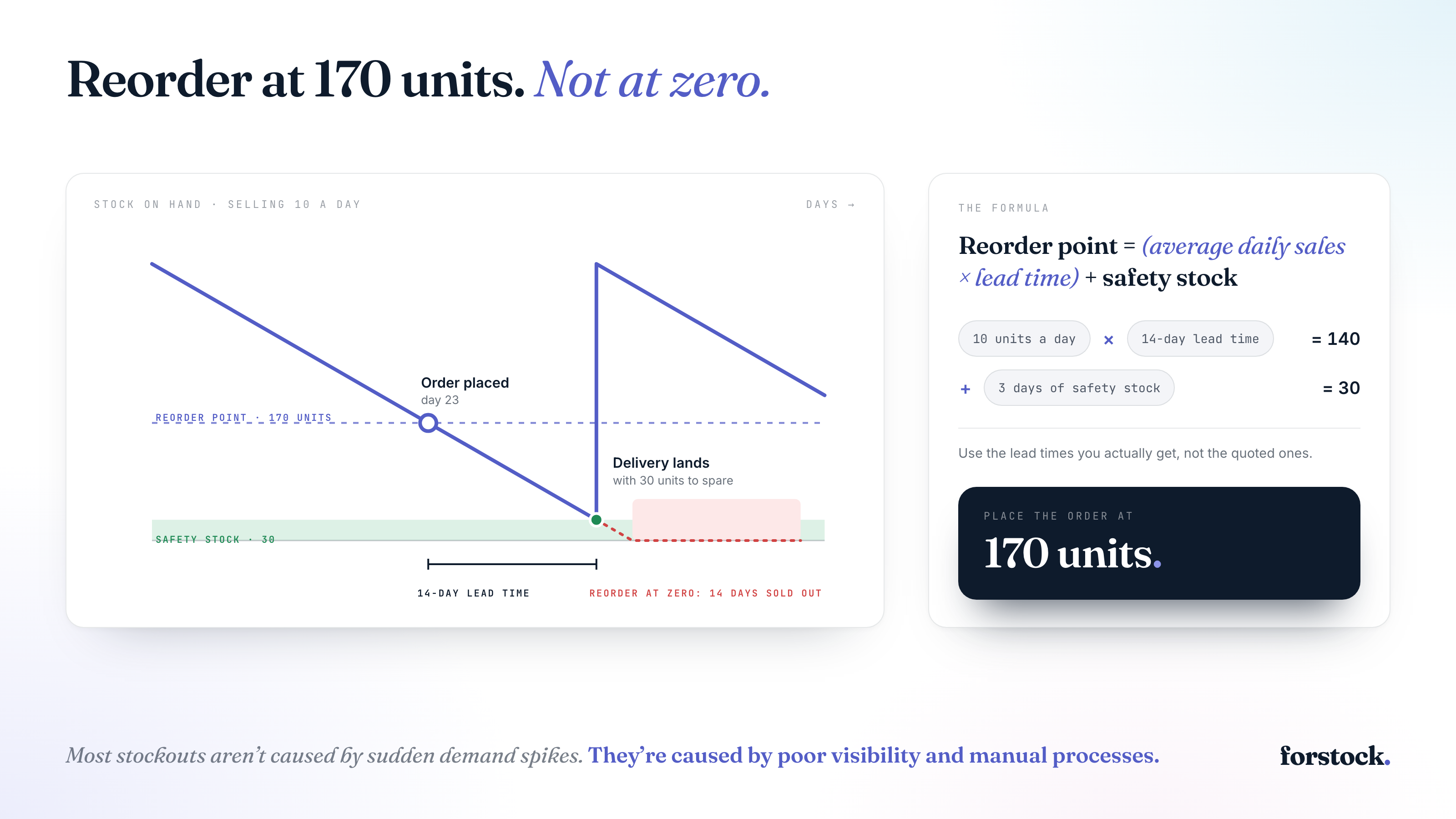
- No lead time accounting — you reorder when stock hits zero instead of weeks before
- Ignoring seasonality — Black Friday demand shouldn't surprise you
- Supplier communication gaps — delays you didn't see coming
5 Strategies to Prevent Stockouts
1. Set Reorder Points for Every SKU
A reorder point is the inventory level at which you should place a new order. The formula is simple:
Reorder Point = (Average Daily Sales × Lead Time) + Safety Stock
For a product selling 10 units/day with a 14-day lead time and 3 days of safety stock, your reorder point is 170 units.
2. Track Supplier Lead Times Religiously
Your suppliers' quoted lead times and their actual lead times are rarely the same. Track every PO from order to delivery and build a real picture of how long things actually take.
3. Use Demand Forecasting
Historical sales data is your best predictor of future demand. Look at year-over-year trends, seasonal patterns, and growth rates. AI tools like Forstock can automate this entirely.
4. Build Safety Stock Into Your Planning
Safety stock is your buffer against uncertainty. The more variable your demand or lead times, the more safety stock you need. Don't treat it as wasted inventory — treat it as insurance.
5. Automate Reorder Alerts
Manual inventory checks don't scale. Set up automated alerts that notify you when any SKU crosses its reorder point, so you can act before it's too late.
The Bottom Line
Preventing stockouts isn't about holding more inventory — it's about holding the right inventory at the right time. With proper reorder points, demand forecasting, and automated alerts, you can keep your shelves stocked without tying up excess cash.