
Why Carrying Costs Are Eating Your Margin
Every dollar of inventory you hold costs you 20–30% per year in storage, insurance, obsolescence, and opportunity cost. For most Shopify brands, inventory is the single largest line item on the balance sheet — and the most poorly managed.
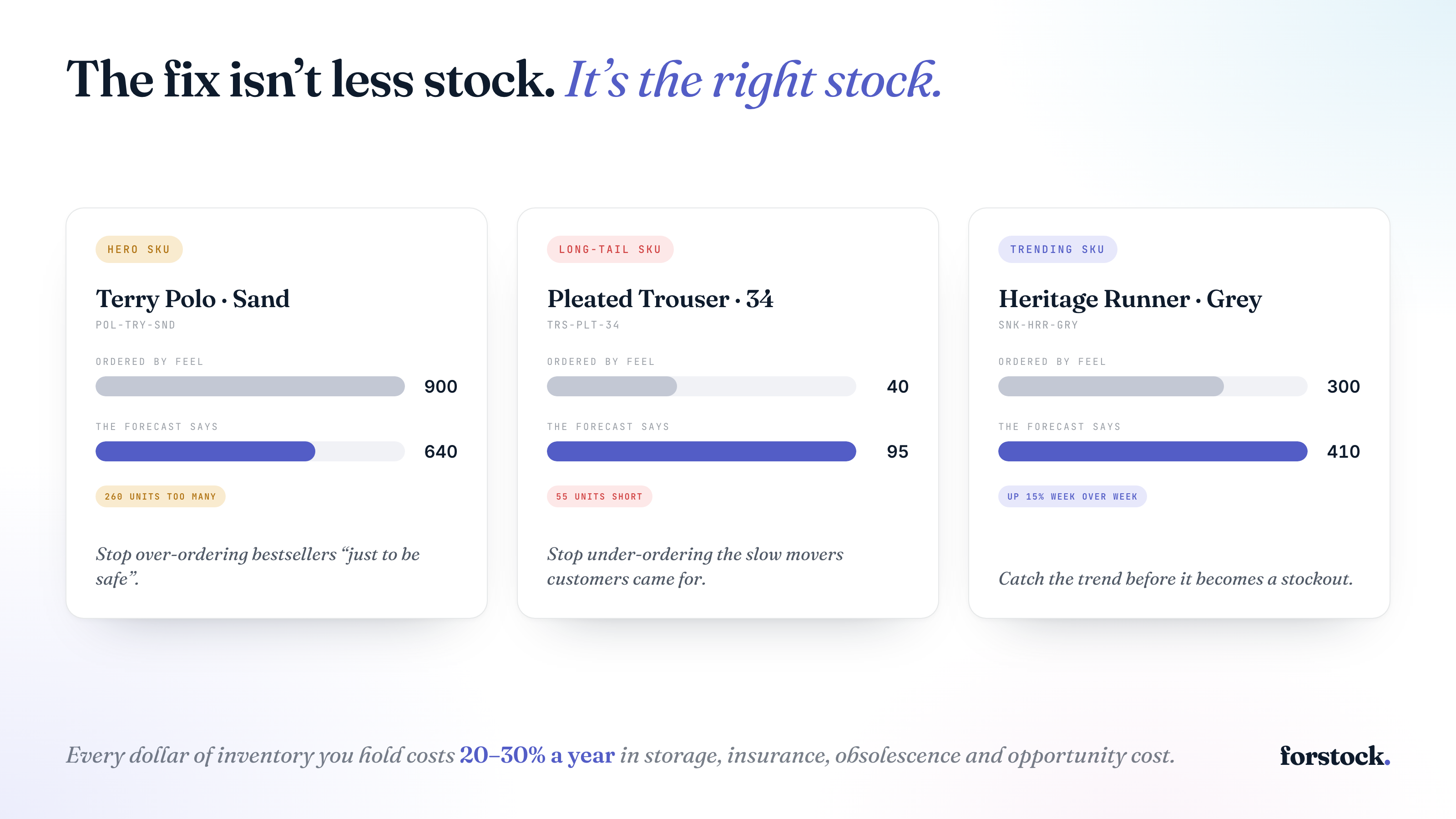
The fix isn't holding less stock. It's holding the right stock. That's what demand forecasting does.
What a Real Forecast Looks Like
A useful demand forecast does three things for every SKU:
- Predicts unit sales for the next 1, 3, and 12 months
- Estimates the confidence interval (your best case vs. worst case)
- Updates automatically as new sales come in
The output isn't a single number — it's a distribution. That distribution drives safety stock, reorder timing, and the cash you tie up at any moment.
Where the Savings Come From
When you forecast well, three things change:
1. You stop over-ordering hero SKUs
Most brands buy too much of their bestsellers "just to be safe." A forecast with a confidence interval tells you exactly how much safety stock you actually need.
2. You stop under-ordering long-tail SKUs
Slow movers get ignored, then stock out, then disappoint customers who came specifically for them. A forecast covers the full catalog.
3. You catch trends before they become stockouts
A SKU growing 15% week-over-week will run out faster than your last reorder assumed. A live forecast flags this in real time.
The Bottom Line
Brands that move from gut-feel reordering to a real demand forecast typically cut inventory by 15–25% while reducing stockouts by 40%+. That's working capital back in the bank — and customers who never see "out of stock."