
AI Stockout Prediction for Shopify Brands
Predict and prevent stockouts using AI: clean sales data, track SKU and lead-time metrics, and automate reorder points to reduce lost sales and overstock.
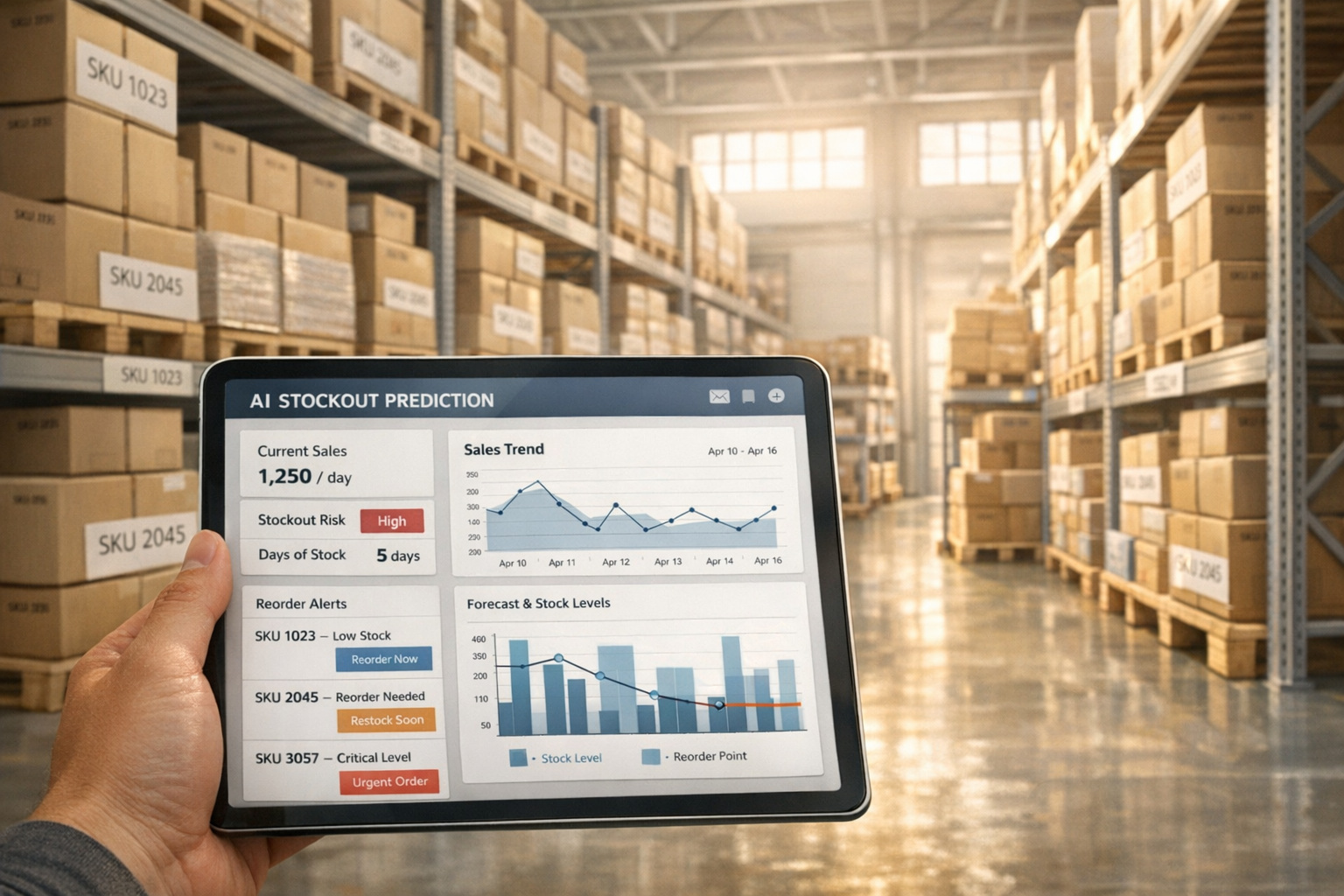
AI Stockout Prediction for Shopify Brands
Running out of stock can cost Shopify brands 15–20% of potential revenue during peak seasons. Stockouts not only hurt sales but also damage customer trust and disrupt future demand forecasting. Many brands rely on outdated tools like spreadsheets, which fail to account for real-time variables like flash sales, social media trends, or weather changes. AI-powered stockout prediction solves this by using live data to forecast demand, helping brands maintain optimal inventory levels without overstocking.
Key Takeaways:
- Stockouts cut revenue and harm loyalty: Shopify brands lose sales and miss demand data when products sell out.
- AI reduces forecasting errors by up to 50% and cuts stockouts by 18%.
- Clean data is critical: AI tools need 12–24 months of sales history and accurate inputs to deliver precise predictions.
- Metrics to track: SKU sales, order frequency, lead times, and stockout records are essential for AI forecasting.
- Forstock integration: This Shopify-compatible tool automates inventory management, calculates reorder points, and adjusts safety stock dynamically. This helps brands calculate safety stock accurately to avoid stockouts.
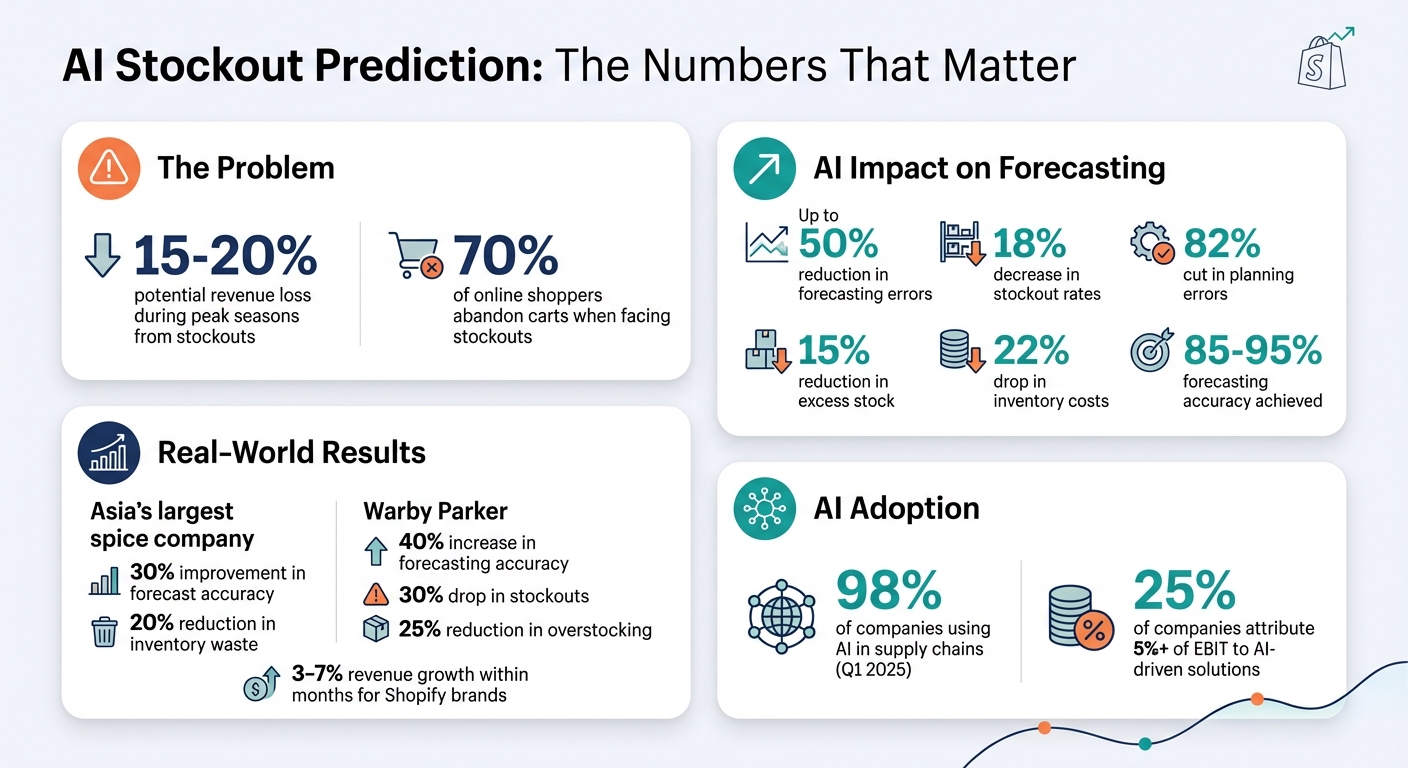
AI Stockout Prediction Impact: Key Statistics for Shopify Brands
5-minute Shopify inventory plan: Julius AI analysis

Preparing Your Shopify Data for AI Predictions
To get the most out of AI forecasting for stockouts, you need clean, well-organized data. The accuracy of your predictions depends entirely on the quality of your inputs. As Conversight.ai aptly puts it:
"Bad data = bad forecasts. AI doesn't magically correct incomplete, messy, or inaccurate inputs".
Most AI tools for forecasting require 12–24 months of sales history to identify trends like seasonal patterns and baseline demand. If you're dealing with newer products or shorter timeframes, it's smart to pair AI predictions with human insights until the model has enough data to work effectively. Once your data is prepared, the next step is tracking the essential inventory metrics that AI models rely on.
Which Inventory Metrics to Track
To create accurate forecasts, track these key metrics:
- SKU-level sales history: Detailed records of product-specific sales.
- Order volume and frequency: How often and how much is sold.
- Sell-through rates: The percentage of inventory sold over a given period.
- Real-time stock levels: Up-to-date inventory counts.
- Turnover rates: How quickly inventory is replenished.
- Stockout records: Document when products run out, keeping in mind that missed sales during stockouts won’t show in typical logs.
Supply chain data is just as important. Record average lead times for each supplier, delivery performance history, and any delays. Additionally, tag promotional events like discounts, influencer campaigns, and flash sales. This helps AI differentiate between regular demand and temporary spikes.
Incorporating external signals can make your forecasts even sharper. AI models perform better when they include factors like local weather, public holidays, social media trends, and broader economic indicators. For example, in 2025, Walmart used weather forecasts and local event data to anticipate a surge in demand for snow shovels and salt before a major storm. This strategy cut inventory costs by 10–15% and boosted sales by 5–7%.
Ensuring Data Quality and Shopify Integration
Before connecting your Shopify store to cloud inventory tools like Forstock, start with a thorough audit of your historical data. Ensure it's complete and consistent across all sales channels. Remove anomalies like one-off viral events or extreme weather impacts that could skew forecasts.
When you integrate Shopify with Forstock, the platform automatically pulls in historical sales data, SKU-level details, order logs, and real-time inventory updates. It uses secure, read-only access to safeguard sensitive sales information while analyzing performance metrics. Forstock also syncs inventory across warehouses, physical stores, and third-party logistics providers (3PLs) in real time, creating a unified view of your inventory and eliminating data silos.
One often-overlooked step is accounting for returns. Treat returns as "availability recovery" by using barcode or RFID scanners to immediately add returned items back into inventory. This ensures the AI recognizes them as available stock. Additionally, syncing Forstock with your Warehouse Management System (WMS) and accounting software like QuickBooks or Xero aligns your forecasts with both cash flow and physical storage capacity.
Consider the results others have achieved: Asia's largest spice company adopted AI forecasting and saw a 30% improvement in accuracy and a 20% reduction in inventory waste. Similarly, Warby Parker used machine learning to predict demand for specific eyeglass frames at individual stores. The result? A 40% increase in forecasting accuracy, a 30% drop in stockouts, and a 25% reduction in overstocking.
Next, learn how to install Forstock on Shopify and start putting AI-powered stockout predictions to work.
Setting Up AI Stockout Prediction with Forstock
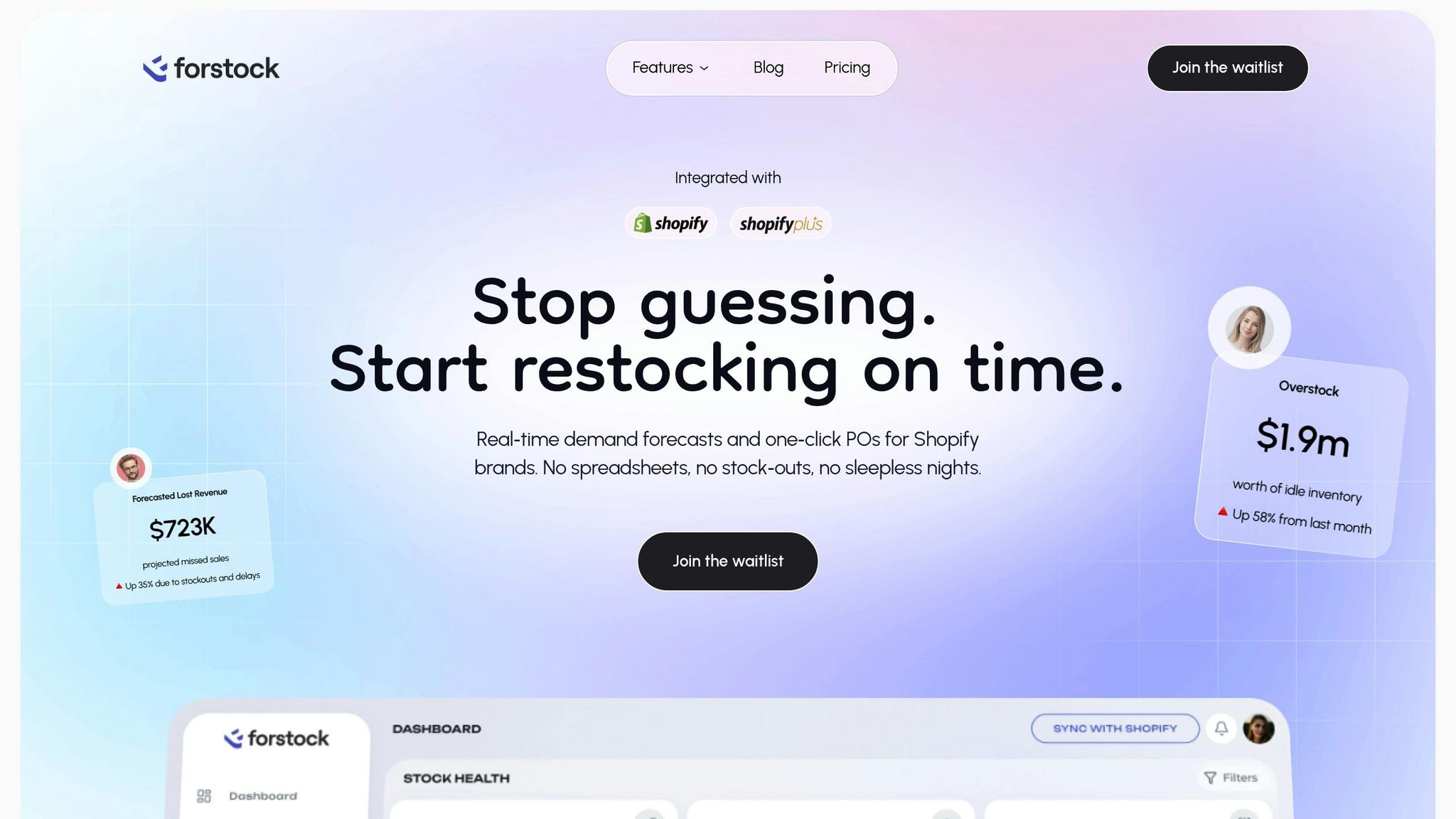
Once your Shopify data is organized, connecting Forstock allows you to automatically sync your sales history, inventory, and product catalog.
Installing Forstock on Shopify
Forstock is designed exclusively for Shopify, ensuring a smooth integration that syncs your listings, orders, and inventory effortlessly. To begin, visit the Forstock website and sign up for a 14-day free trial. Pricing starts at $79/month, granting access to key analytics, inventory insights, and automated ordering tools.
After creating your account, you'll authorize Forstock to securely connect to your Shopify store. This read-only access lets the platform analyze your sales data and inventory without risking sensitive information. If you manage stock across multiple locations - like warehouses, retail outlets, or third-party logistics providers (3PLs) - Forstock keeps everything in sync, offering a real-time, unified inventory view.
Once integrated, you'll gain access to Alfred AI, a conversational assistant that interprets your store data and provides instant inventory recommendations. As one e-commerce manager shared:
"Before Forstock, I was literally living in spreadsheets. I spent hours each week updating stock levels and trying not to miss reorder points. Since switching, I haven't had a single stockout, and I don't overorder anymore".
Next, configure the AI forecasting settings to customize Forstock for your inventory needs.
Configuring AI Forecasting Settings
To fine-tune your inventory management, set up forecasting parameters for each SKU. Focus on three key metrics: safety stock levels, lead times, and reorder points. Safety stock acts as a cushion against unexpected demand surges or supply chain delays. The formula is straightforward: Safety stock = (Max daily sales × Max lead time) – (Avg daily sales × Avg lead time). Forstock’s AI uses your Shopify data to update these figures dynamically, replacing static buffers with real-time recommendations.
Lead time refers to the period between placing an order with your supplier and receiving the stock. It's crucial to provide accurate lead times, as even a two-day discrepancy can lead to stockouts. The reorder point, on the other hand, signals when to place a new purchase order. It’s calculated as: (Average sales per day × Lead time) + Safety stock.
By combining real-time sales data with supplier lead times, Forstock determines exactly when and what products need reordering. The centralized dashboard gives you instant insights into inventory turnover, stock value, and supplier performance, eliminating the need for juggling multiple spreadsheets. One inventory manager described their experience:
"I open the dashboard in the morning and instantly know what needs reordering, what is overstocked, and what to focus on. It is one of the few SaaS tools I would call essential for scaling".
As of Q1 2025, 98% of companies reported using AI in their supply chains for inventory optimization and forecasting. Additionally, 25% of companies attribute over 5% of their Earnings Before Interest and Taxes (EBIT) to AI-driven solutions like demand planning. With your forecasting settings in place, you’re ready to monitor and refine predictions using live data.
sbb-itb-f0fc809
Monitoring and Adjusting AI Forecasts
Once your AI forecasting system is up and running, keeping a close eye on its performance is key to maintaining accuracy as conditions evolve. Forstock's dashboard offers real-time insights into demand trends, supplier performance, and inventory status - all in one place. No more juggling spreadsheets or waiting for end-of-month reports. With your forecasting settings established, you can use these tools to monitor and fine-tune predictions as needed.
Let’s dive into the metrics provided by Forstock's analytics dashboard.
Reading Forstock's Analytics Dashboard
The dashboard highlights five essential metrics that help prevent stockouts and keep inventory levels on track:
- Days of Supply: This metric estimates how many days remain before a product runs out, helping you plan timely restocks.
- Fill Rate: Measures the percentage of customer demand that is met with available inventory.
- Stockout %: Tracks how often items go out of stock, giving you a clear picture of where disruptions occur.
- Mean Absolute Percentage Error (MAPE): Indicates the accuracy of your AI predictions - lower percentages mean more reliable forecasts.
- Lead Time: Captures the time between placing an order and receiving inventory, helping you account for potential delays in shipping or production.
AI-powered forecasting has proven to significantly improve inventory management. For instance, it can cut planning errors by up to 82% and reduce excess stock by 15%. Businesses using AI for demand planning have reported a 22% drop in inventory costs and an 18% decrease in stockout rates. By monitoring these metrics daily rather than monthly, you can catch potential issues early, avoiding costly disruptions. This is especially important given that about 70% of online shoppers abandon their carts when faced with stockouts.
Updating Predictions with Live Data
Monitoring is only half the battle. The ability to adapt forecasts in real time ensures your inventory strategy stays effective. When unexpected changes arise, manual adjustments can make all the difference.
For steady-demand products, rely on the AI's baseline predictions. However, for new product launches, incorporate expert insights to refine forecasts. Be cautious of one-time sales spikes - excluding these anomalies prevents overestimating future demand. Adjust safety stock levels dynamically based on current market signals: increase buffers during periods of volatility and reduce them when demand stabilizes. This approach helps you maintain cash flow efficiency. Additionally, update lead times, promotional calendars, and seasonal templates to reflect real-world conditions.
As ConverSight aptly points out:
"AI doesn't magically correct incomplete, messy, or inaccurate inputs - it amplifies them".
Conclusion
From preparing data to monitoring in real-time, every step strengthens your inventory management approach. By adopting AI-powered stockout prediction, Shopify brands can shift to smarter, data-driven forecasting that adjusts to sales patterns, seasonal demand, and lead times. Following the steps in this guide helps you safeguard against costly stockouts while keeping cash flow steady. Start by gathering and cleaning your historical data, set up Forstock's AI forecasting to align with your business needs, and use the analytics dashboard to spot and address potential issues before they escalate.
The results speak for themselves - Shopify brands using AI-driven forecasting have seen 18% fewer stockouts and 3–7% revenue growth within just a few months. With 98% of companies integrating AI into their supply chains as of Q1 2025, staying ahead in the competitive landscape means embracing tools that scale seamlessly, whether you're managing a handful of SKUs or tens of thousands.
Forstock's unified dashboard offers your team a clear, reliable view to make smarter purchasing decisions. It automates reorder point calculations and dynamically adjusts safety stock levels, removing the guesswork that often leads to empty shelves during high-demand periods.
AI also gets better with time. As Forstock processes more data, its predictions become increasingly accurate, achieving 85–95% forecasting accuracy. This continuous improvement ensures your inventory strategy evolves alongside market dynamics, all without requiring constant manual adjustments.
Take the first step with a 14-day free trial to test Forstock on your best-selling products. Once you're ready, scale it across your entire catalog. The time you save on manual planning can be reinvested into growth opportunities, while your customers benefit from consistent product availability - building trust, loyalty, and a stronger reputation for your brand.
FAQs
How does AI help Shopify brands predict and prevent stockouts?
AI is transforming how Shopify brands predict stockouts by processing vast amounts of data, such as sales trends, seasonal fluctuations, lead times, and even external influences like market changes. Unlike static spreadsheets, AI-driven models continuously update in real time, adjusting to new sales behaviors and delivering precise demand forecasts.
For Shopify merchants, this means smarter purchasing decisions rooted in data. AI helps minimize the risk of stockouts, ensures customer demands are met, and avoids the pitfalls of overstocking. The result? A more efficient inventory process that saves time, reduces expenses, and optimizes overall management.
What data is needed for accurate AI-based inventory forecasting?
For accurate AI-powered inventory forecasting, several key data inputs play a crucial role:
- Historical sales data at the SKU level, revealing purchasing patterns and trends over time.
- Real-time updates on orders and stock levels, ensuring forecasts reflect the latest inventory status.
- Details about promotions, marketing efforts, and seasonal trends, helping to predict demand fluctuations like spikes or dips.
- Supplier information, including lead times and reorder quantities, to sync inventory with restocking schedules.
- External influences such as weather, social trends, or market shifts, which can trigger unexpected changes in demand.
Forstock brings all these data points together effortlessly. By integrating real-time Shopify sales data, promotional calendars, and supplier metrics, it delivers 12-month demand forecasts and automated purchase-order suggestions. This helps merchants sidestep stockouts, cut down on overstock, and consistently meet customer needs with confidence.
How can Shopify brands maintain high-quality data for AI-powered stockout prediction?
To make sure AI-driven stockout predictions are accurate, Shopify brands need to focus on maintaining top-notch data quality. The first step? Centralize all your sales, inventory, and supplier data into a single, well-organized system. This gives the AI a clear, consistent dataset to work with. It’s also important to clean up historical sales data - get rid of duplicates, fix errors, and standardize units (like sticking to "each" instead of mixing it with "dozen"). Since manual data entry often leads to mistakes, automating the process is a smart move to keep things accurate.
Set up automated data updates so real-time sales, returns, and supplier lead times flow directly from Shopify into your AI system. This ensures the model stays in sync with the latest market trends and avoids delays. Regular audits are also essential - check for missing information or unusual patterns in your data. Use statistical tools to catch and fix inconsistencies before they can mess with your predictions.
Tools like Forstock make this easier by syncing Shopify data in real time, automatically normalizing SKUs, and flagging errors for quick fixes. By blending automation with regular data checks, Shopify brands can provide their AI systems with reliable information, reducing the chances of stockouts.
Keep reading
Try Forstock free for 14 days.
AI-powered demand forecasting and reorder automation for Shopify brands. No credit card required.