
Top SaaS Inventory Platforms Shopify Brands Trust
Compare top SaaS inventory platforms for Shopify, featuring real-time sync, AI demand forecasting, automated purchasing, and multi-location management to cut stockouts and free cash.
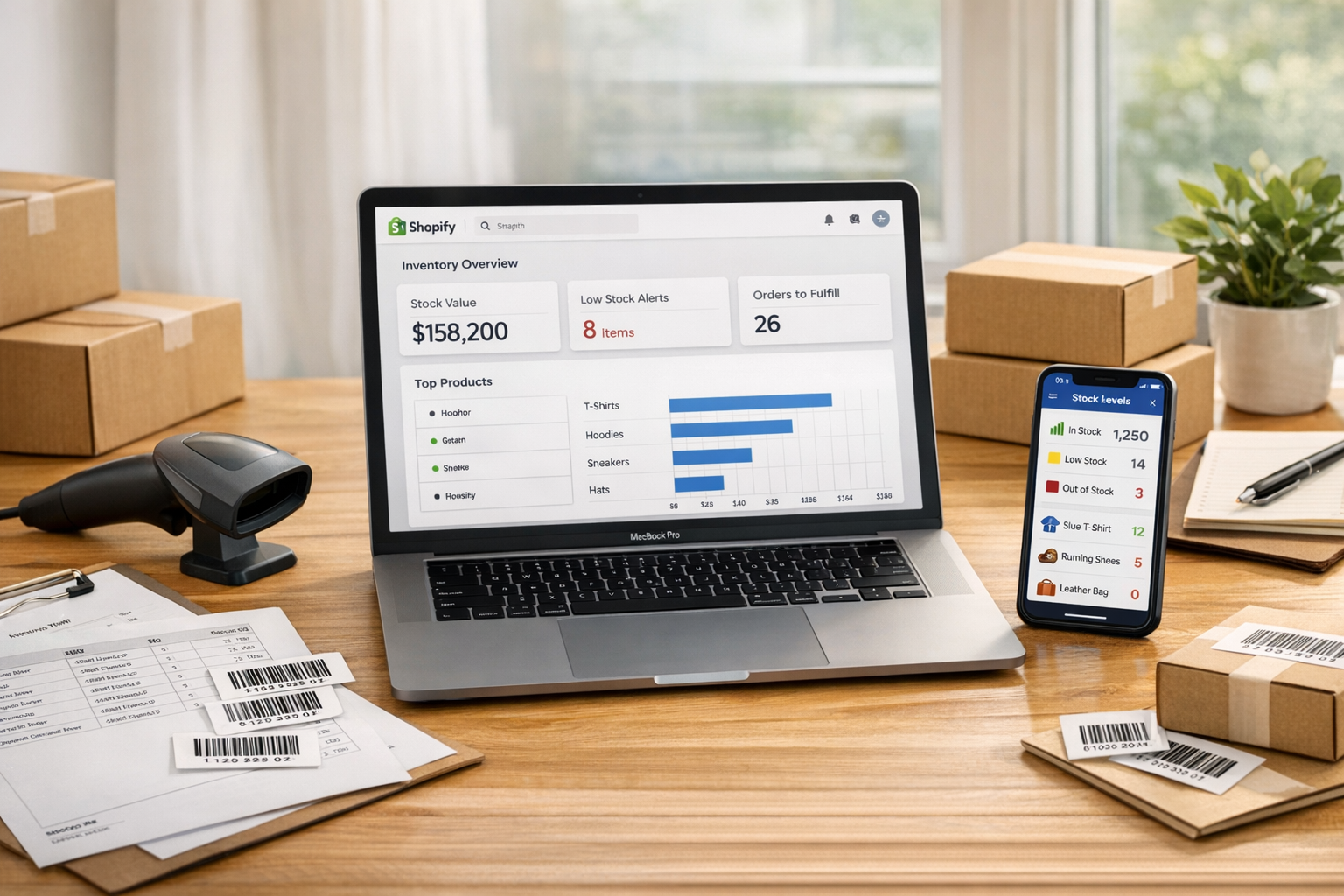
Top SaaS Inventory Platforms Shopify Brands Trust
Managing inventory effectively is critical for Shopify brands. Poor inventory practices can lead to stockouts, overstocking, and wasted time, costing businesses millions annually. SaaS inventory platforms solve these problems by automating stock tracking, forecasting demand, and syncing data across all sales channels.
Key benefits include:
- Real-time inventory syncing: Avoid overselling and improve accuracy.
- AI-powered demand forecasting: Predict when to restock and reduce surplus inventory.
- Automated purchasing: Save hours by generating purchase orders automatically.
- Multi-location management: Centralize stock tracking across warehouses, stores, and suppliers.
For example, brands like Odaje and Oak + Fort saw increased sales and reduced costs by implementing these platforms. Tools like Forstock simplify operations, helping businesses avoid stockouts, free up cash, and scale efficiently.
Quick Tip: If you're managing over 50 SKUs or selling across multiple channels, it's time to switch from spreadsheets to a SaaS inventory platform.
Top Inventory Management Apps for Shopify

What Shopify Brands Need in an Inventory Platform
For Shopify brands, picking the right inventory platform isn’t just about fancy features - it’s about solving real problems. The right tools should cut down on manual tasks, prevent costly errors, and grow with your business. These essentials tackle common challenges like stockouts, surplus inventory, and time-consuming processes. Let’s break down what matters most.
Shopify Integration and Real-Time Data Sync
Your inventory platform should act as a single source of truth, ensuring every sales channel reflects accurate, up-to-date stock levels.
Without real-time syncing, inventory visibility hovers around just 70%. That gap can lead to overselling during high-demand periods, leaving customers frustrated with "out of stock" messages after adding items to their cart.
Take the example of French footwear brand Odaje. In January 2025, they unified inventory data across 16 physical stores and their online shop. The result? A 6% boost in conversion rates and a 25% jump in international sales.
Alexandra McNab, COO of Bared Footwear, shared, "Having all our tooling and commerce data unified in a single platform was a real driving factor. All our sales channels display the same stock availability, and we can run a promotion online and in‑store concurrently without worrying about overselling."
By automating inventory tracking, merchants typically save 10 to 15 hours each month. That’s time better spent on growing your brand instead of counting stock. Plus, this integration sets the stage for better demand forecasting.
Demand Forecasting and Automated Purchasing
Reordering inventory shouldn’t feel like a guessing game. Order too soon or too much, and you’re stuck with excess stock tying up cash. Order too late, and you risk losing sales to stockouts.
Modern platforms use AI-powered forecasting to analyze sales trends, seasonal patterns, and marketing activity, helping predict when stock will run low. These systems can spot potential stockouts up to 30 days earlier than manual methods, giving you plenty of time to restock.
Automated purchasing takes this a step further. By setting reorder points using this formula - (Average Lead Time in Days × Average Daily Sales) + Safety Stock = Reorder Point - the system generates purchase orders automatically. No more scrambling to figure out what to order or which supplier to contact.
This proactive approach can protect your bottom line. In 2022, U.S. businesses saw logistics costs rise by 19.6%, with carrying costs making up 52% of that increase. Ordering the right amount at the right time helps you avoid unnecessary expenses and lost revenue.
Once your forecasting and purchasing are streamlined, managing inventory across multiple locations becomes the next big focus.
Multi-Location and Supplier Management
As your Shopify brand grows, managing inventory across multiple locations - whether warehouses, retail stores, or third-party fulfillment centers - becomes more complex. Add in juggling suppliers with varying lead times, and things can quickly spiral.
A strong inventory platform tracks stock across all locations, making it easy to transfer products where they’re needed most. It also centralizes supplier communication, reducing administrative work and keeping everything organized.
For instance, Oak + Fort adopted a unified retail operating system to handle inventory fluctuations across locations. The result? They cut staff labor by 50 hours per week and reduced operating costs by 47%.
When 80% of organizations experience between one and ten supply chain disruptions in a year, having clear visibility across locations and suppliers isn’t just helpful - it’s essential to keeping your business running smoothly.
Forstock: Inventory Management Built for Shopify
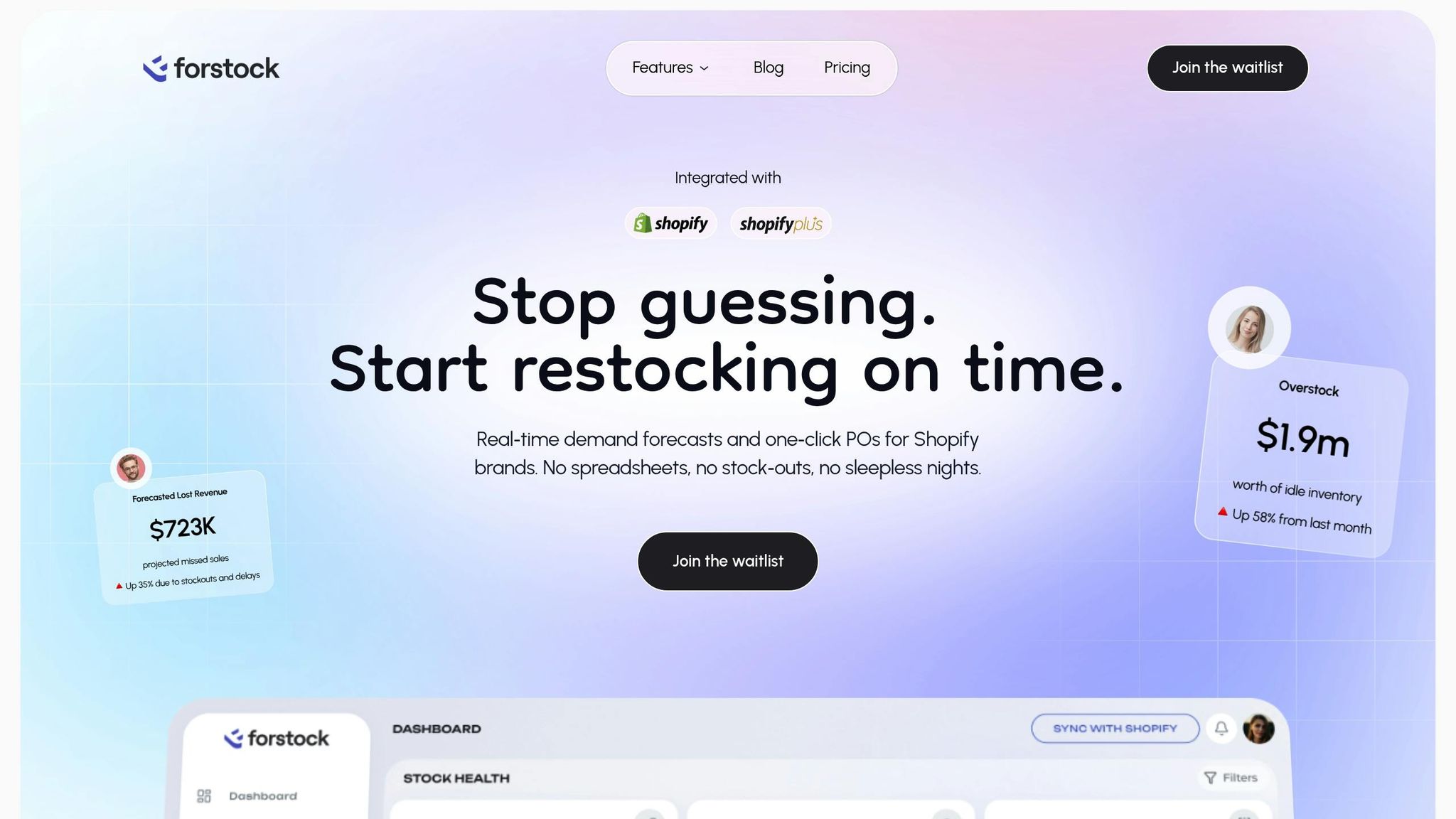
Forstock is a SaaS platform designed specifically for Shopify brands, offering a smarter alternative to spreadsheets. It combines demand forecasting, automated purchasing, and supplier coordination into one streamlined dashboard. The goal? To simplify operations and eliminate fragmented workflows for growing businesses.
Shopify Integration Overview
Forstock syncs your Shopify catalog in real time, creating a centralized hub for inventory management. The setup takes just 2 minutes, giving you a single source of truth without the need to toggle between Shopify, spreadsheets, or emails.
The platform tracks inventory at both SKU and variant levels, automatically updating stock counts as orders are placed or shipments arrive. Marking goods as received in Forstock instantly reflects those updates in Shopify, ensuring your sales channels stay synchronized without the hassle of manual data entry.
Main Features for Shopify Merchants
Forstock packs a range of tools tailored for Shopify merchants, focusing on forecasting, purchasing, and analytics.
Its AI-powered demand forecasting analyzes sales trends, seasonality, and lead times to predict when inventory might run low, alerting you before stockouts happen. Using advanced time-series models, the system adapts to your business patterns, replacing guesswork with data-driven reorder suggestions.
Turning forecasts into action is simple with purchase order (PO) creation. With one click, you can generate POs using templates or CSV imports, split orders by location, and account for landed costs like freight and duties. The platform also tracks supplier performance, payment statuses, and open orders, all within one dashboard.
The inventory analytics dashboard acts as your command center, offering insights into inventory health, turnover rates, stock value, and aged inventory at a glance. You can filter data by location or category to quickly identify overstocks or highlight top-performing products. Plus, Alfred AI is on hand to answer questions like, “What should I reorder this week?” based on your data.
| Feature Category | Key Capabilities |
|---|---|
| Forecasting | AI-driven models, seasonality adjustments, hierarchical forecasting (SKU/Variant/Warehouse) |
| Purchasing | Automated POs, landed cost tracking (freight/duties), supplier performance monitoring, MOQs/case pack handling |
| Operations | Real-time Shopify sync, multi-location support, bundle/kit breakdown, goods receipt tracking |
| Analytics | Inventory turnover, days of supply, stockout percentages, excess inventory heatmaps |
Business and Financial Impact
Forstock users report cutting manual inventory tasks by at least 60%, with automated purchase order creation saving over 10 hours each week. For example, TechGear's Operations Lead Matt credits Forstock's AI predictions with saving $50,000 in monthly stockout costs. Similarly, Jason, Co-founder of HomeGoods, reduced excess inventory by 45%, freeing up $150,000 in working capital.
"The automated PO creation saves us 10+ hours weekly. Setup was seamless - just 2 minutes!" - Alexander, Supply Chain Manager at FashionCo
"Before Forstock, I was literally living in spreadsheets. Since switching, I haven't had a single stockout, and I don't overorder anymore." - Sophie, E-commerce Manager
For many Shopify merchants, these time and cost savings lead to better cash flow and smoother growth. By optimizing inventory levels and avoiding costly stockouts, Forstock helps businesses scale more efficiently while maintaining control over their operations.
sbb-itb-f0fc809
How Shopify Brands Use SaaS Inventory Platforms
Shopify brands depend on SaaS inventory platforms to tackle three major challenges: keeping their best-sellers in stock, freeing up cash tied up in surplus inventory, and managing stock across multiple locations. These platforms replace guesswork with smart, data-driven strategies.
Preventing Stockouts on Top-Selling Products
Running out of best-sellers can lead to a significant loss of revenue. SaaS platforms help avoid this by analyzing historical sales trends, SKU performance, and lead times to predict when stock levels are getting low. They can then trigger alerts or even automate purchase orders to ensure timely replenishment. By calculating lead time demand (average lead time × average daily sales) and factoring in safety stock, these tools help brands restock before inventory runs out.
Take Healf, a health and wellness brand, for example. In 2024, they used demand forecasting tools to fine-tune their restocking process. With the help of real-time stockout metrics, Operations Associate Billy Kavanagh and his team reduced their stockout rate from 4% to just 1% in only two months. This improvement unlocked hundreds of thousands of dollars in annual revenue. Similarly, esports brand Quadrant achieved remarkable results in 2023 by using real-time inventory insights during a product launch. They sold out their entire stock in just 18 minutes and fulfilled orders within days, thanks to accurate demand planning.
Aligning inventory management with marketing campaigns can amplify these results. By reviewing promotional calendars alongside inventory data, brands can ensure they have enough stock to meet anticipated demand. This prevents the costly mistake of running out of products during high-traffic periods and helps maintain healthier cash flow.
Improving Cash Flow by Cutting Excess Stock
Excess inventory can tie up a lot of working capital. SaaS platforms help brands identify slow-moving products by using inventory turnover analysis and aged stock reports. This allows companies to optimize their inventory levels and free up cash. Some brands have unlocked over $150,000 in working capital by reducing overstock. Better forecasting also reduces over-ordering, cutting down on waste and storage costs. In fact, system-driven inventory audits that correct discrepancies have been shown to boost sales by around 11%.
Beyond improving cash flow, having unified inventory data across all locations makes operations more efficient. By streamlining stock management, brands can focus their resources on growth rather than dealing with excess stock.
Managing Stock Across Multiple Locations
For brands with multiple warehouses, retail stores, or third-party logistics providers (3PLs), having a unified view of inventory is crucial. It prevents overselling and ensures products are available where they’re needed most. SaaS platforms sync inventory levels across all locations in real time, accounting for sales, returns, and transfers.
A great example is Danish tea retailer TeSelskabet. In January 2025, they introduced a bi-directional synchronization system between their physical and online stores to manage their intricate ingredient inventories. This change not only prevented overselling but also drove a 25% increase in sales.
How to Select an Inventory Platform for Your Shopify Store
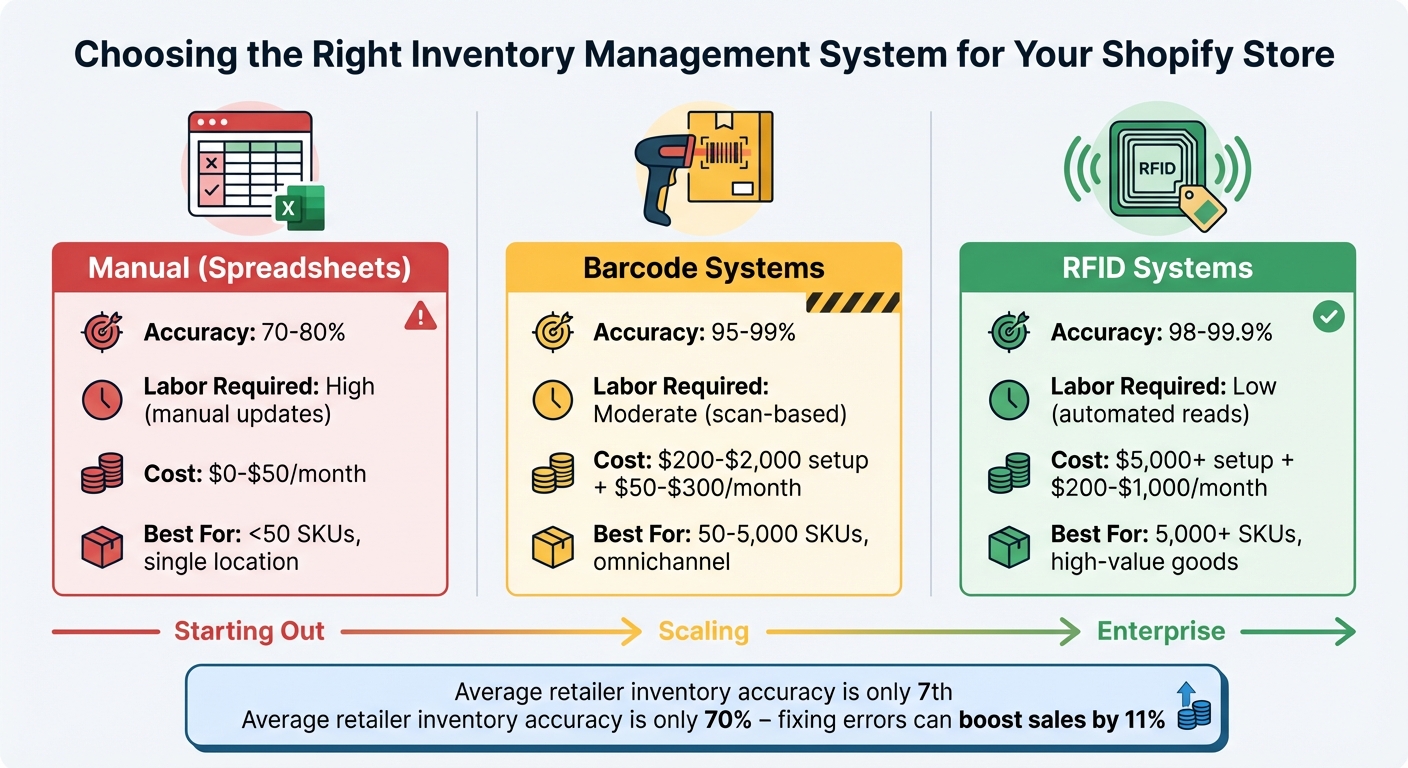
Inventory Management Systems Comparison: Manual vs Barcode vs RFID for Shopify Stores
Finding the right inventory platform can make a world of difference for your Shopify store. The right system should grow with your business, reduce manual work, and help you manage stock and cash flow efficiently.
Evaluate Your Business Needs
Start by taking a close look at your current operations. How many SKUs do you manage? Are you selling on multiple channels? What challenges are slowing you down? If you’re handling fewer than 50 SKUs in one location, manual tracking might still work. But once you scale to 50–5,000 SKUs or expand across multiple sales channels, you'll need automated tools like barcode systems to keep everything in sync.
Think ahead, too. Where do you see your business in the next 12–18 months? For example, between 2020 and 2025, Latin cooking brand Loisa experienced over 100% year-over-year growth. VP of Operations Shom Gupta realized their Excel spreadsheets were no longer cutting it and switched to an AI-powered platform. The result? They saved 104 hours annually and avoided stockouts, even during rapid growth. Planning for scalability now can save you from costly migrations later.
Your inventory type also matters. Selling perishable goods? You'll need features like lot tracking and expiration date management. For high-value items like electronics, look for serialization to track individual units. French footwear brand Odaje used a unified system to connect inventory data across 16 physical stores and their online shop, leading to a 6% boost in conversion rates and a 25% jump in international sales.
Once you’ve outlined your needs, look for platforms that align with them.
Match Features to Your Needs
With your requirements in hand, focus on features that can streamline your operations. Real-time syncing is a must if you’re selling across multiple channels like Shopify, Amazon, TikTok, or even brick-and-mortar stores. It prevents overselling and keeps inventory data accurate. Australian brand Bared Footwear used to shut down retail stores during online promotions because their old system couldn’t sync fast enough. After upgrading to a unified platform, they achieved real-time synchronization and kept all stores open during busy sales events.
If you’re ready to move beyond guesswork, consider AI-driven demand forecasting. These tools analyze historical sales, seasonal patterns, and market changes to predict demand, helping you avoid tying up cash in excess inventory or losing sales to stockouts. For businesses with multiple locations, choose a platform that tracks stock movements and simplifies transfers. Automation is another key feature to save time - look for systems that can auto-generate purchase orders and send low-stock alerts based on preset thresholds.
Here’s a quick comparison of inventory management options:
| Feature | Manual (Spreadsheets) | Barcode Systems | RFID Systems |
|---|---|---|---|
| Accuracy | 70%–80% | 95%–99% | 98%–99.9% |
| Labor Required | High (manual updates) | Moderate (scan-based) | Low (automated reads) |
| Cost | $0–$50/mo | $200–$2,000 setup; $50–$300/mo | $5,000+ setup; $200–$1,000/mo |
| Best For | < 50 SKUs, single location | 50–5,000 SKUs, omnichannel | 5,000+ SKUs, high-value goods |
Once you’ve identified the right platform, it’s time to plan your implementation.
Plan Your Implementation
Successful adoption starts with data preparation. Before switching systems, conduct a full physical inventory count to establish an accurate baseline. On average, retailers only have accurate inventory visibility 70% of the time, and fixing these errors can boost sales by about 11%. Standardizing SKU naming conventions is another step to reduce data entry mistakes.
Take advantage of free trials to test the platform with your real data and past sales. This will help you verify the accuracy of AI-driven forecasting. Roll out complex features like AI forecasting in stages - start with a single product line or warehouse to build confidence. Use ABC analysis to focus your efforts: count your "A" items (the top 20% of SKUs that generate 80% of your revenue) weekly, while reviewing "C" items quarterly.
Training your team is equally important. Teach them how to handle POS operations, update inventory, and troubleshoot issues. Sweet E's Bake Shop founder Erica Tucker emphasized the importance of simplicity:
"My favorite thing about using Shopify POS is that it's simple and easy to use. I can easily train all my staff... I can manage products, run reports, and keep a pulse on my business myself."
Lastly, set up automated workflows. For example, use Shopify Flow to create low-stock alerts or draft purchase orders when inventory hits certain thresholds. This ensures your team stays proactive instead of scrambling to react.
Conclusion
Modern SaaS inventory platforms have redefined inventory management, turning it from a source of stress into a tool for growth. With real-time visibility across all your sales channels, AI-powered demand forecasting, and automated workflows to handle repetitive tasks, you can focus on scaling your business instead of worrying about stock levels.
The numbers paint a clear picture of how costly inventory mismanagement can be. Retailers, on average, achieve only 70% inventory accuracy, and addressing these gaps can lead to a roughly 11% increase in sales. In 2021, out-of-stock items caused retailers to lose a staggering $82 billion in sales. Similarly, the fashion industry suffered an estimated $70–$140 billion in lost sales in 2023 due to excess inventory.
Forstock offers a powerful Shopify integration that tackles these challenges head-on. It provides real-time inventory syncing, AI-driven forecasts that look up to 12 months ahead, and automated ordering to minimize manual work. Whether you're managing 50 SKUs or 5,000, Forstock adjusts to your needs, helping you avoid stockouts, reduce dead stock, and make smarter purchasing decisions. By adopting these tools, Shopify brands can sidestep costly errors and unlock new growth opportunities.
Success in retail isn't just about having the largest budget - it's about using technology strategically. When your inventory system prevents overselling during a promotion, warns you before a best-seller runs out, and identifies which products are tying up your cash flow, you gain the clarity and confidence to scale efficiently. This approach shifts your focus from reacting to problems to preventing them altogether. Combining real-time data with AI-driven insights creates a proactive system that empowers growth and eliminates unnecessary risks.
FAQs
How does AI-powered demand forecasting help Shopify brands manage inventory more effectively?
AI-driven demand forecasting provides Shopify brands with a smarter way to manage inventory. By analyzing factors like sales patterns, seasonal trends, and supplier lead times, it predicts inventory needs with accuracy. This helps brands steer clear of stockouts, avoid overstocking, and keep just the right amount of stock - no guesswork required.
Beyond forecasting, automation takes care of tasks like creating purchase orders and tracking inventory. This not only saves time but also minimizes manual mistakes. The payoff? Better cash flow, fewer missed sales, and a smoother inventory process that keeps up with shifting customer demands.
What are the main advantages of using a SaaS inventory platform instead of spreadsheets?
SaaS inventory platforms bring a whole new level of efficiency to managing stock. With features like real-time tracking, automated demand forecasting, and centralized management, they go far beyond the capabilities of spreadsheets. These tools help businesses avoid stockouts and overstock by sending precise reorder alerts, improving cash flow, and cutting down on costly manual mistakes.
Unlike static spreadsheets, these platforms offer a clear view of inventory across multiple locations and can adjust to shifting sales trends. By automating repetitive tasks, they free up valuable time, allowing businesses to focus on growth while making smarter, data-driven inventory decisions.
How does managing inventory across multiple locations help Shopify brands grow?
Managing inventory across multiple locations lets Shopify brands treat each warehouse, store, or fulfillment center as a distinct entity within a single, streamlined system. This approach improves visibility and control, allowing businesses to allocate stock based on regional demand. The result? Fewer stockouts, less overstocking, and a smoother operation overall. By ensuring the right products are available in the right places, brands can shorten delivery times and boost customer satisfaction.
With centralized data, automating tasks like reordering and demand forecasting becomes much simpler. This not only saves time but also reduces the risk of errors. Real-time insights into stock levels across locations mean businesses can adapt quickly to seasonal trends, promotions, or unexpected supply chain hiccups. Tools like Forstock make this even easier by syncing inventory, providing AI-driven forecasts, and automating purchase orders. This helps brands grow efficiently without adding unnecessary complications.
Keep reading
Try Forstock free for 14 days.
AI-powered demand forecasting and reorder automation for Shopify brands. No credit card required.