
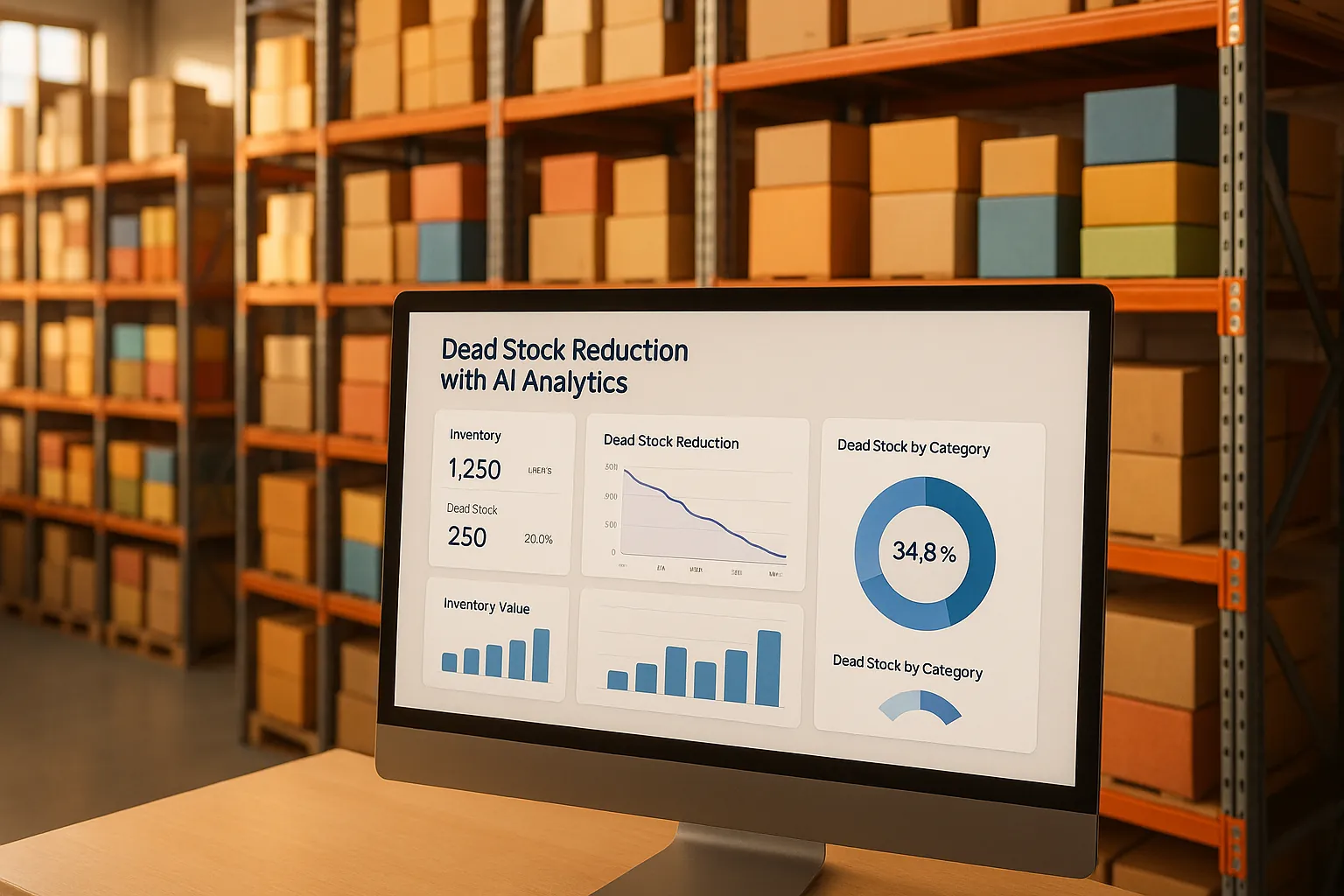
Dead stock is a costly problem for Shopify brands, tying up cash and increasing storage expenses. AI analytics offers a solution by providing accurate demand forecasting, real-time adjustments, and SKU-level insights to prevent overstocking. Platforms like Forstock integrate directly with Shopify, helping businesses reduce dead stock write-offs from 8–12% to just 2–4%, improve inventory turnover, and shorten holding periods.
Key Takeaways:
- AI Forecasting: Predicts slow-moving products with 95% accuracy, ensuring smarter purchasing decisions.
- Stock Intelligence: Monitors inventory performance and flags potential dead stock early.
- Real-Time Adjustments: Aligns inventory with live sales and seasonal trends.
- Shopify Integration: Automates purchase orders and redistributes inventory across locations.
By switching to AI-powered tools, Shopify merchants can save time, cut costs, and free up cash for growth.
How AI Analytics Solves Dead Stock Problems
AI Demand Forecasting That Delivers Results
AI-powered forecasting takes sales predictions to the next level for Shopify brands. By analyzing historical data, seasonal patterns, promotional activities, and external influences, it creates a dynamic model that adapts as new information comes in. This means you can predict which products might become slow movers and make adjustments before they pile up.
What sets AI forecasting apart is its ability to catch subtle trends that might slip past human analysis. It identifies drops in product sales and highlights underperforming SKUs across different seasons, giving you the chance to tweak your purchasing strategy before it's too late.
These insights are the backbone of Forstock's solutions, designed to tackle the challenge of dead stock head-on.
How Forstock Tackles Dead Stock

Forstock's AI-driven platform is built to handle dead stock issues with precision. Its demand forecasting tool boasts an impressive 95% accuracy rate, analyzing your Shopify store's sales data, lead times, and seasonal trends to craft detailed 12-month demand plans. This helps you avoid overordering and keeps problematic SKUs in check.
The platform’s Stock Intelligence feature is like having an always-on inventory watchdog. It keeps tabs on how all your products are performing and flags items that might be heading toward dead stock territory. This early warning system gives you the opportunity to pivot - whether that means revamping your marketing approach or running targeted promotions - before items become stagnant.
Forstock also uses real-time data to automate purchase orders and provide tailored safety stock recommendations. This ensures you're ordering just the right amount, reducing the risk of excess inventory while keeping your stock levels optimized.
Benefits of Seamless Shopify Integration

Forstock's direct integration with Shopify takes inventory management to a whole new level. By syncing real-time sales, inventory, and multi-location data, the platform generates automated alerts and helps you streamline your inventory distribution.
The multi-location tracking feature is especially useful. It allows you to redistribute inventory efficiently across warehouses, retail outlets, or fulfillment centers. If a product is selling fast in one location but sitting idle in another, the system spots it and helps you act before it turns into dead stock.
This real-time efficiency ensures you're always ready to adapt to shifting demand and seize market opportunities as they arise.
YDISTRI's AI solution: Sell 'Unsellable' Inventory
Key Metrics for Tracking Dead Stock Reduction
Keeping tabs on the right metrics is crucial for making informed inventory decisions. With AI analytics, you get the insights needed to minimize dead stock. Here are the key metrics that highlight how AI can help tackle this challenge.
Inventory Turnover Ratio
This metric reveals how often your inventory is sold and restocked over a given period. It's calculated by dividing the cost of goods sold by the average inventory value. A higher turnover ratio means products are moving quickly, reducing the amount of cash tied up in slow-moving stock. While industry benchmarks vary, AI forecasting can boost this ratio from a common 3.2 to an impressive 5.8. By accounting for factors like seasonal trends, promotions, and market shifts, AI ensures you're stocking products that customers actually want - when they want them.
Average Inventory Holding Period
The average inventory holding period measures how long items sit in storage before being sold. It's determined by dividing 365 by the turnover ratio. A shorter holding period means better cash flow and a lower chance of products becoming outdated. With AI, this period can shrink from the typical 60–90 days to a leaner 30–45 days. This not only frees up cash but also cuts down on storage costs.
Reduction in Dead Stock Write-Offs
Dead stock write-offs reflect the percentage of inventory that goes unsold and must be discarded each year. Traditional management methods often result in 8–12% of inventory being written off annually. AI forecasting can slash this figure to just 2–4%. By identifying problems like slowing sales or changes in seasonal demand early on, AI gives you the chance to make adjustments and prevent overstocking.
These metrics together paint a clear picture of inventory health. Higher turnover rates, shorter holding periods, and fewer write-offs mean improved cash flow and a reduced risk of accumulating costly dead stock. They also lay the groundwork for AI-driven strategies to keep your inventory lean and efficient.
sbb-itb-f0fc809
AI Strategies to Prevent Dead Stock Before It Happens
Using advanced metrics, AI strategies are designed to tackle dead stock issues before they arise. These systems empower businesses to stay ahead of inventory challenges through automated ordering, real-time adjustments, and deep product-level insights. Together, these tools help keep inventory efficient and profitable.
Automated Purchase Orders and Reordering
AI systems take the guesswork out of inventory management by analyzing real-time sales data, lead times, and seasonal trends to generate precise purchase orders. For example, platforms like Forstock integrate these capabilities into a unified Shopify dashboard, streamlining the process and reducing the risk of overstocking.
But it’s not just about timing. AI also calculates the exact quantities to order, factoring in variables like promotional campaigns, customer behavior, and market trends - details that manual methods often overlook. This ensures businesses meet demand without tying up capital in slow-moving products, reducing the likelihood of dead stock.
Real-Time Adjustments for Seasonal Changes
One of the biggest pitfalls in traditional inventory planning is its inability to adapt quickly to shifting market conditions. AI, on the other hand, continuously updates forecasts based on real-time data - whether it’s unexpected weather changes or shifts in economic trends - helping businesses align inventory with current demand.
For instance, if economic indicators suggest a dip in discretionary spending, AI systems automatically adjust forecasts for non-essential products. By processing thousands of variables at once, AI can make rapid adjustments that manual methods or basic spreadsheets simply can’t match. This flexibility is particularly valuable for seasonal businesses or brands running frequent promotions, as it prevents both stock shortages and overstocking.
Product-Level Analytics for Quick Action
While overall inventory metrics are useful, SKU-level insights are essential for taking swift action to avoid dead stock. AI tools provide detailed analytics that highlight products showing early signs of slowing sales, enabling businesses to act quickly.
These insights can reveal patterns like declining sales velocity, shifting customer preferences, or seasonal impacts on specific items. When the system flags a dip in sales, businesses can respond with strategies like markdowns or bundling to move inventory faster.
Additionally, these tools aid in long-term decision-making. For instance, if certain SKUs consistently underperform or show seasonal trends that don’t align with your business model, you can adjust your purchasing strategy or discontinue those items in future cycles. This proactive approach ensures that inventory remains lean and aligned with demand.
Why AI Inventory Management Is Worth the Investment
Upgrading to AI-powered inventory management builds on proven methods for reducing dead stock while significantly boosting overall business performance. For Shopify brands, this shift can redefine profitability and growth. Businesses that adopt AI inventory management often experience noticeable improvements in efficiency, accuracy, and scalability across their operations.
Main Benefits of AI-Powered Inventory Management
AI systems are game-changers when it comes to preventing overordering and cutting down on dead stock. This means businesses can free up capital that would otherwise be tied up in unsold inventory. That extra cash can then be reinvested into marketing campaigns, product innovation, or expanding popular product lines.
Another major advantage is automation. AI takes over demand forecasting and purchase order creation, saving merchants countless hours of manual analysis. Instead of poring over spreadsheets and second-guessing future sales trends, business owners can focus on making strategic decisions that drive growth. By replacing guesswork with data-backed precision, AI eliminates the constant worry of overstocking or running out of inventory.
AI also grows with your business. While managing inventory manually might work for a company with 50 SKUs, scaling up to 500 or even 5,000 products is a different ballgame. AI-powered systems can handle massive amounts of data effortlessly, ensuring that inventory management doesn’t become a roadblock as your business scales.
Perhaps the most striking benefit is accuracy. AI can analyze thousands of variables - like seasonal trends and economic conditions - that are beyond the scope of human analysis. This level of detail results in more accurate forecasts and smarter purchasing decisions, directly reducing dead stock and optimizing cash flow tied to inventory.
Why Forstock Works Best for Shopify Merchants
Forstock brings these benefits to life with features specially designed for Shopify merchants. Its seamless Shopify integration and impressive 95% forecasting accuracy streamline inventory management while minimizing dead stock. By helping merchants order the right quantities at the right time, Forstock reduces the risk of stockouts and overstock situations that lead to unsold inventory.
One standout feature is real-time adjustments. Forstock quickly aligns inventory with ever-changing market conditions, giving businesses the agility they need. The platform also provides 12-month demand planning visibility, allowing merchants to identify potential dead stock issues well in advance. This early insight means merchants can take proactive steps - like running promotions or bundling products - to prevent inventory from going unsold.
Forstock also excels in improving inventory turnover and shortening holding periods. At just $79 per month, the platform offers enterprise-level AI tools at a price accessible to businesses of all sizes. The flat pricing structure ensures predictable costs, even as your business scales, making it easier to plan for inventory management as part of your overall growth strategy.
Additionally, Forstock’s centralized supplier communication feature helps avoid ordering mistakes - a common cause of dead stock. By streamlining the entire inventory process, Forstock equips Shopify merchants with the tools they need to thrive.
FAQs
How does AI improve demand forecasting for Shopify brands?
AI-powered analytics takes demand forecasting to the next level for Shopify brands by diving deep into real-time sales data, seasonal patterns, and current market trends. The result? Predictions that are far more accurate than those churned out by traditional methods, which often depend on static historical data. What makes AI stand out is its ability to learn and adapt continuously, keeping forecasts sharp and relevant, even as conditions change.
For Shopify merchants, this means smarter decisions when it comes to purchasing inventory. With AI in the mix, businesses can cut down on overstock, avoid stockouts, and stay agile in the face of shifting customer demands. The benefits ripple across operations - better cash flow, less waste, and a more streamlined approach to managing inventory.
How does Forstock help Shopify merchants reduce dead stock?
Forstock equips Shopify merchants with powerful tools to address the challenge of dead stock. With features like real-time demand forecasting, automated purchase order creation, and advanced inventory analytics, it helps businesses accurately predict demand, reduce overstocking, and make more informed purchasing decisions.
Thanks to its seamless integration with Shopify, Forstock consolidates inventory management into one user-friendly dashboard. Merchants can keep a close eye on stock levels, simplify supplier coordination, and automate repetitive tasks. This not only saves time but also allows businesses to focus on growth while avoiding expensive inventory mishaps.
How does using AI-powered tools like Forstock improve profitability and growth for Shopify businesses?
AI-powered tools, such as Forstock, are changing the game for Shopify businesses by streamlining inventory management and boosting cash flow. With precise demand forecasting, these tools help businesses avoid the pitfalls of running out of stock or holding excess inventory. This not only cuts down on unnecessary costs but also ensures you’re ready to seize every sales opportunity.
On top of that, automation takes over time-consuming tasks like creating purchase orders and coordinating with suppliers. This frees up valuable time and trims operational costs. Plus, real-time analytics deliver actionable insights, empowering businesses to make smarter, data-driven decisions that drive growth. The result? Better inventory control, happier customers, and a noticeable increase in profitability.