
Reorder Point Calculator
Calculate your reorder point easily with our free tool! Optimize stock levels, avoid shortages, and keep your business running smoothly.
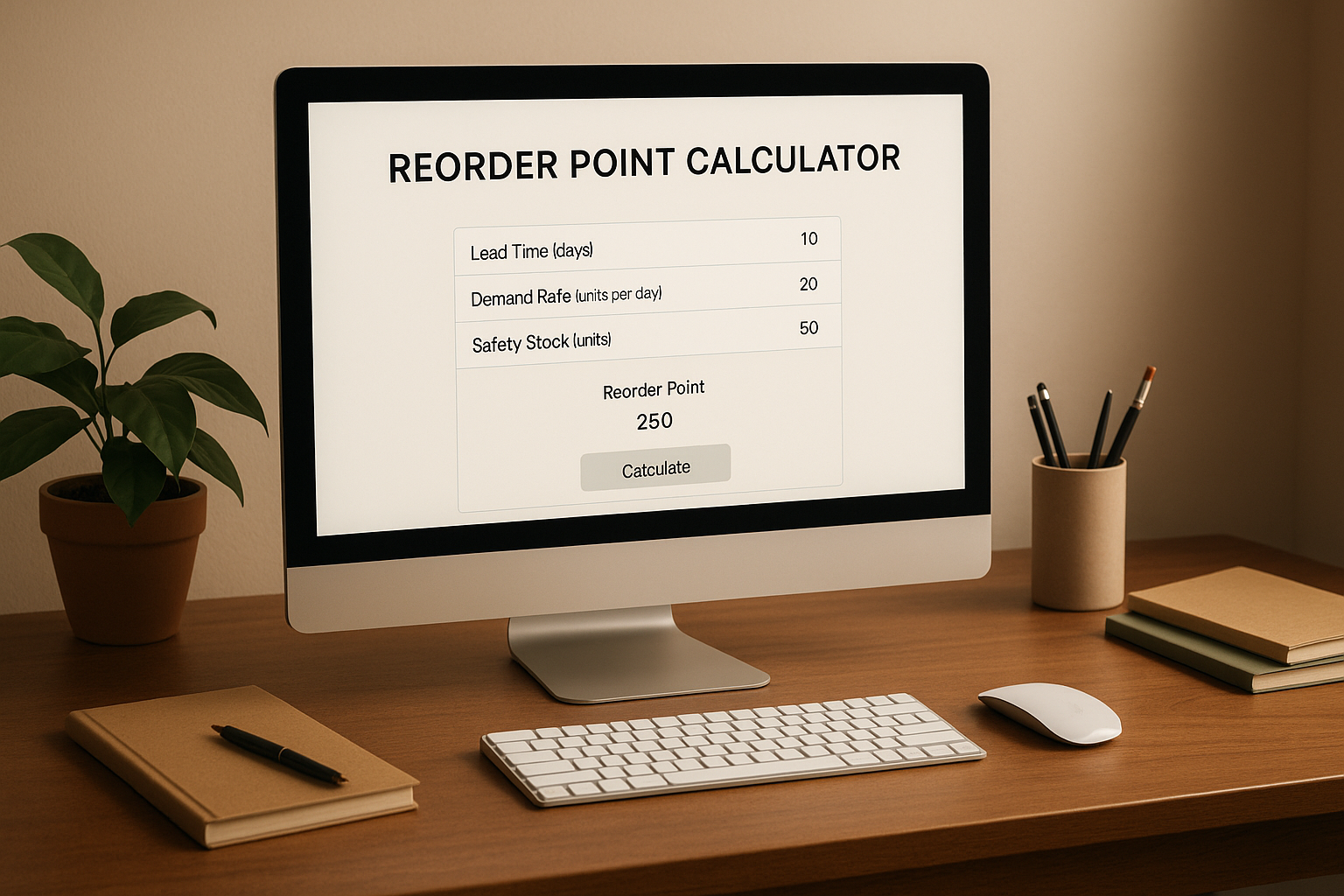
Reorder Point Calculator
Optimize Your Inventory with a Reorder Point Calculator
Managing stock levels can make or break a small business. If you’ve ever scrambled to restock at the last minute or lost sales due to empty shelves, you know the struggle. That’s where a tool to calculate your reorder threshold comes in handy. It’s a straightforward way to figure out the exact moment you need to order more inventory, ensuring you’re never caught off guard.
Why Inventory Planning Matters
Smart inventory planning isn’t just about having enough product—it’s about balance. Overstocking ties up cash and storage space, while understocking risks disappointing customers. By using a simple calculation that factors in your daily sales and supplier lead times, you can pinpoint the sweet spot. This approach works for retailers, wholesalers, or anyone juggling physical goods. Plus, it gives you peace of mind to focus on growing your business rather than micromanaging stock.
Take Control of Your Stock Today
Whether you’re running a boutique or a warehouse, knowing when to reorder is a game-changer. Pair this strategy with a reliable tool, and you’ll streamline operations without breaking a sweat. Stop guessing and start planning with precision.
FAQs
What is a reorder point, and why does it matter?
A reorder point is the inventory level at which you should place a new order to avoid running out of stock. It’s calculated based on your daily sales, the time it takes to restock, and any extra buffer you want to keep. Knowing this number is crucial because it helps you maintain a steady flow of products without overstocking or facing shortages that could frustrate customers. Think of it as a safety net for your business operations.
How do I figure out my average daily demand?
To get your average daily demand, look at your sales data over a specific period—say, a month or a quarter—and divide the total units sold by the number of days in that period. For example, if you sold 300 units in 30 days, your average is 10 units per day. If your sales fluctuate a lot, consider using data from a busier season or trend to be safe. This number is the foundation of an accurate reorder point.
Should I always include safety stock in the calculation?
Not necessarily—it depends on your business. Safety stock is extra inventory to cover unexpected spikes in demand or delays in delivery. If your supply chain is super reliable and demand is predictable, you might skip it. But if you’re in a volatile market or can’t afford to run out, adding a small buffer is a smart move. Start with a modest amount and adjust based on what you learn over time.
Try Forstock free for 14 days.
AI-powered demand forecasting and reorder automation for Shopify brands. No credit card required.